

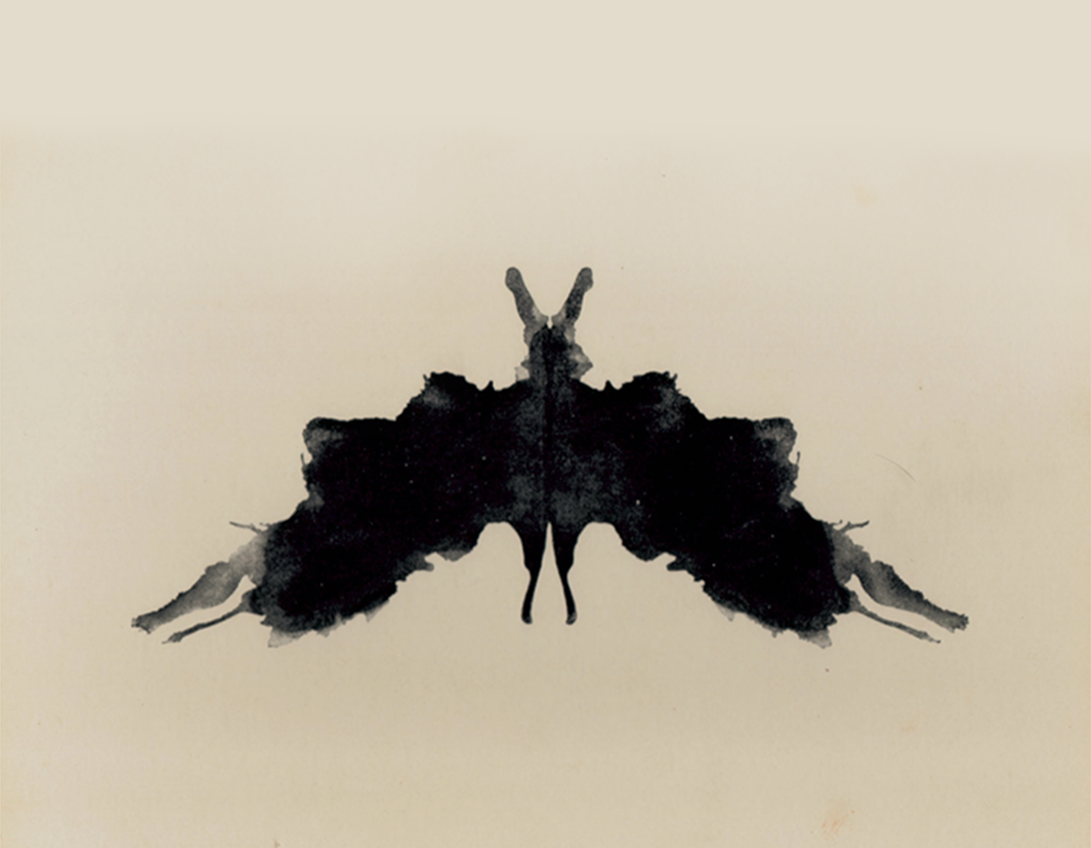
Rorschach Test Experiment
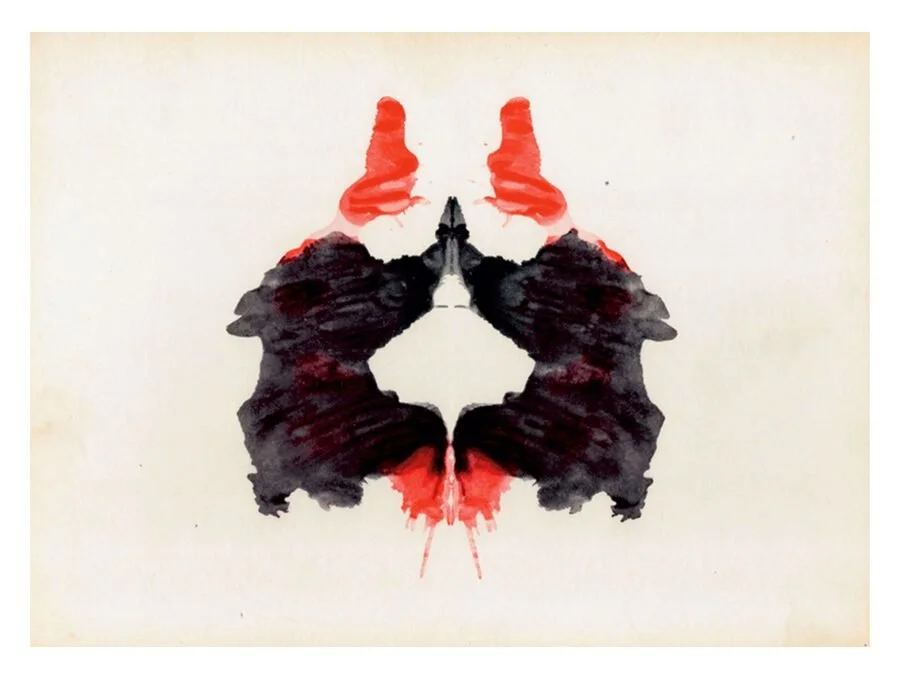
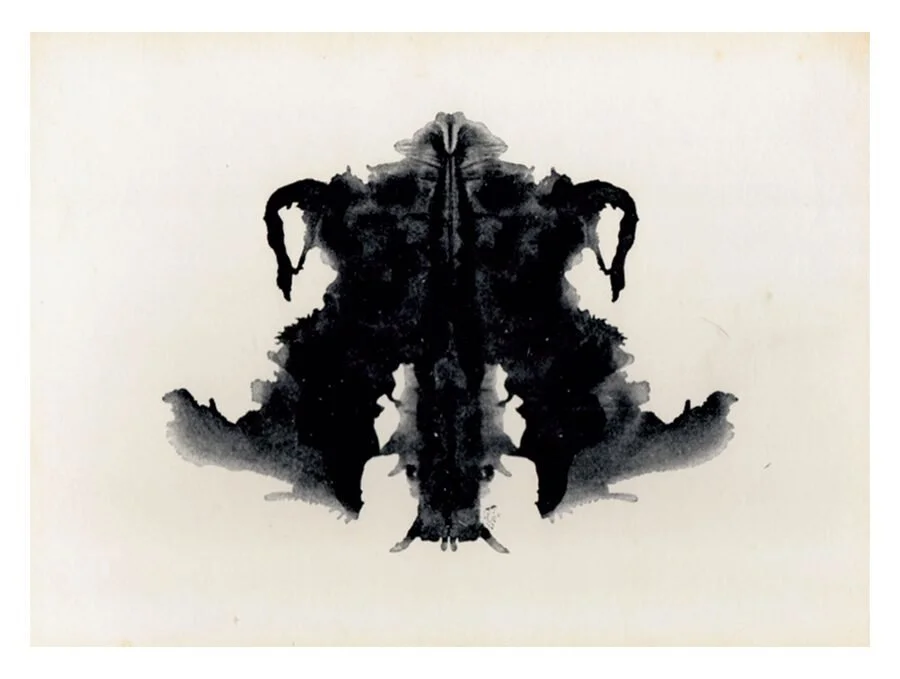
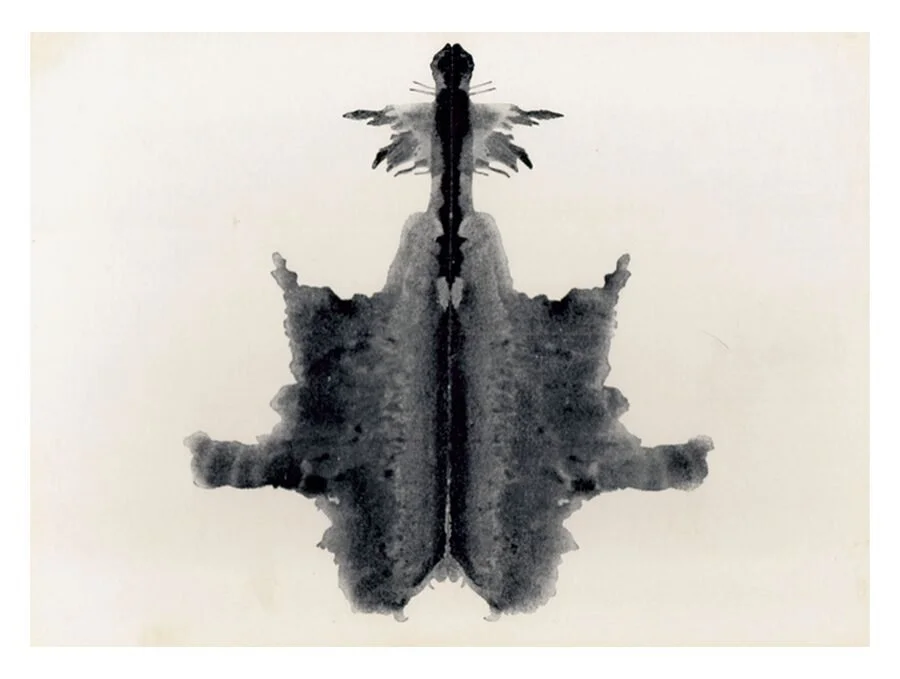
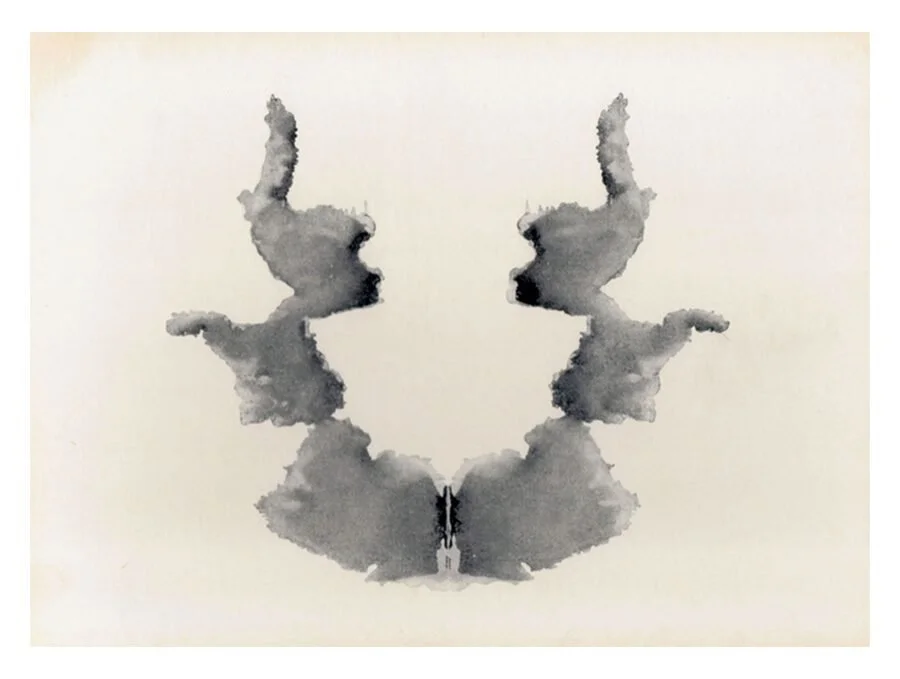
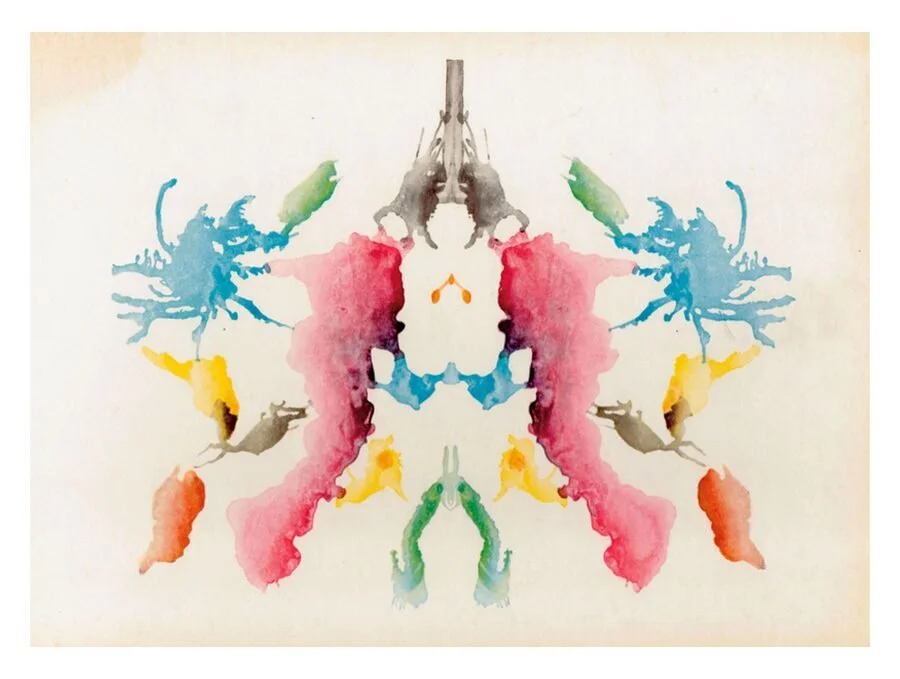
projection: ten ink blots,
answered with the body.
you see?
RTE, 2019
Rorschach Test Experiment is my third series built on Hermann Rorschach’s inkblot test, and my first entry into conceptual art. My two earlier attempts set out to recreate the blots photographically. I came to see them as illustrations of the test rather than inquiries into it. Rorschach Test Experiment abandons that approach: instead of interpreting the test, it administers it.
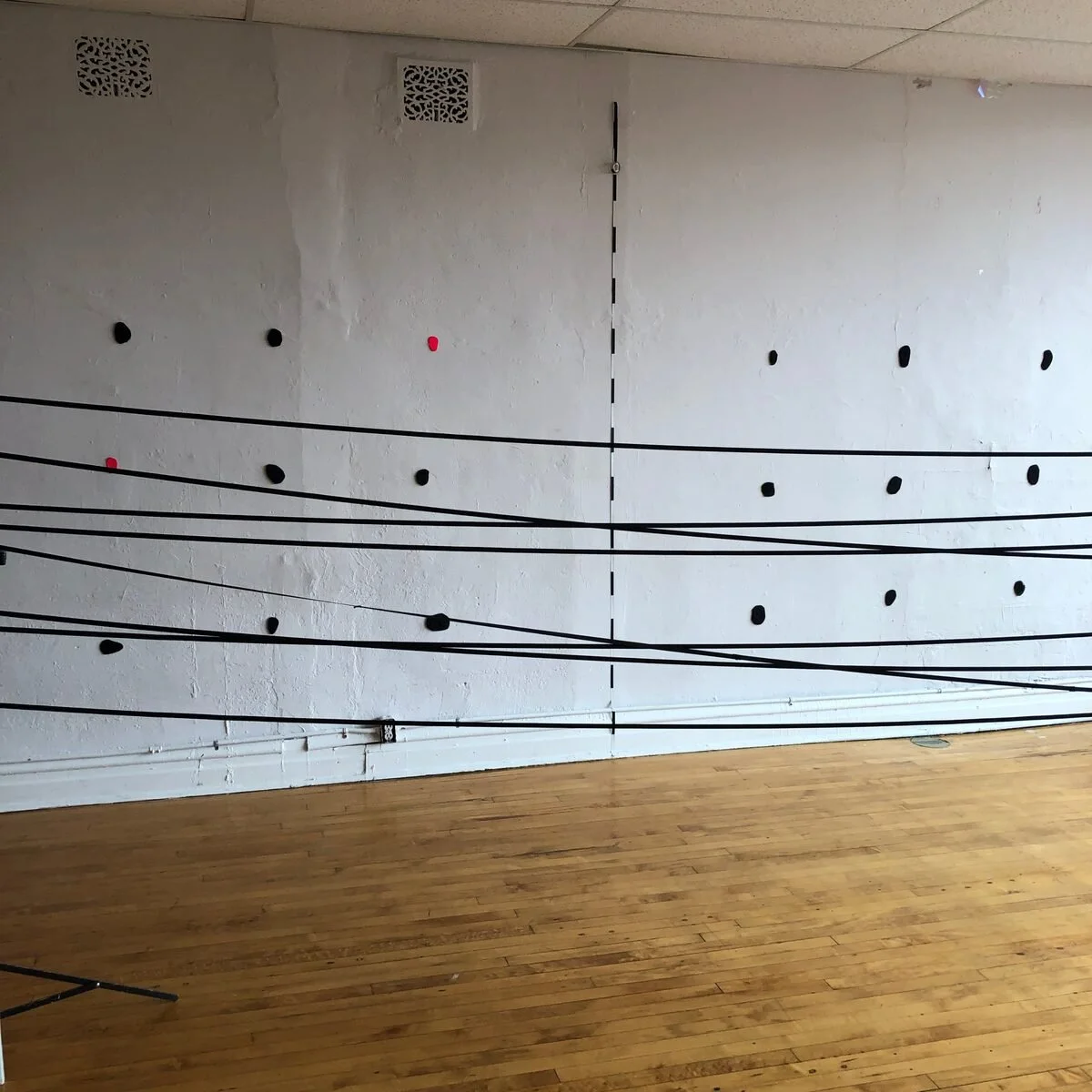
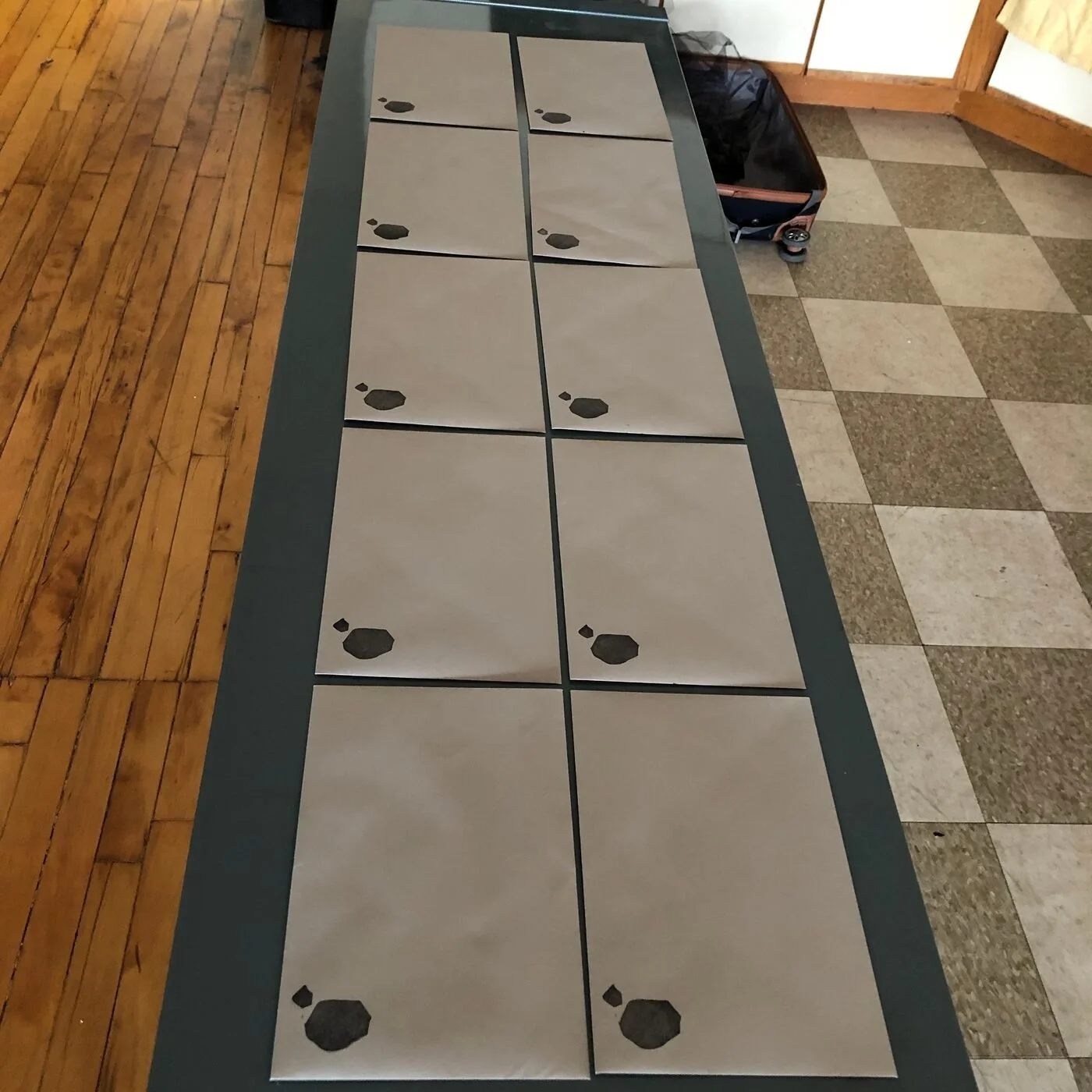
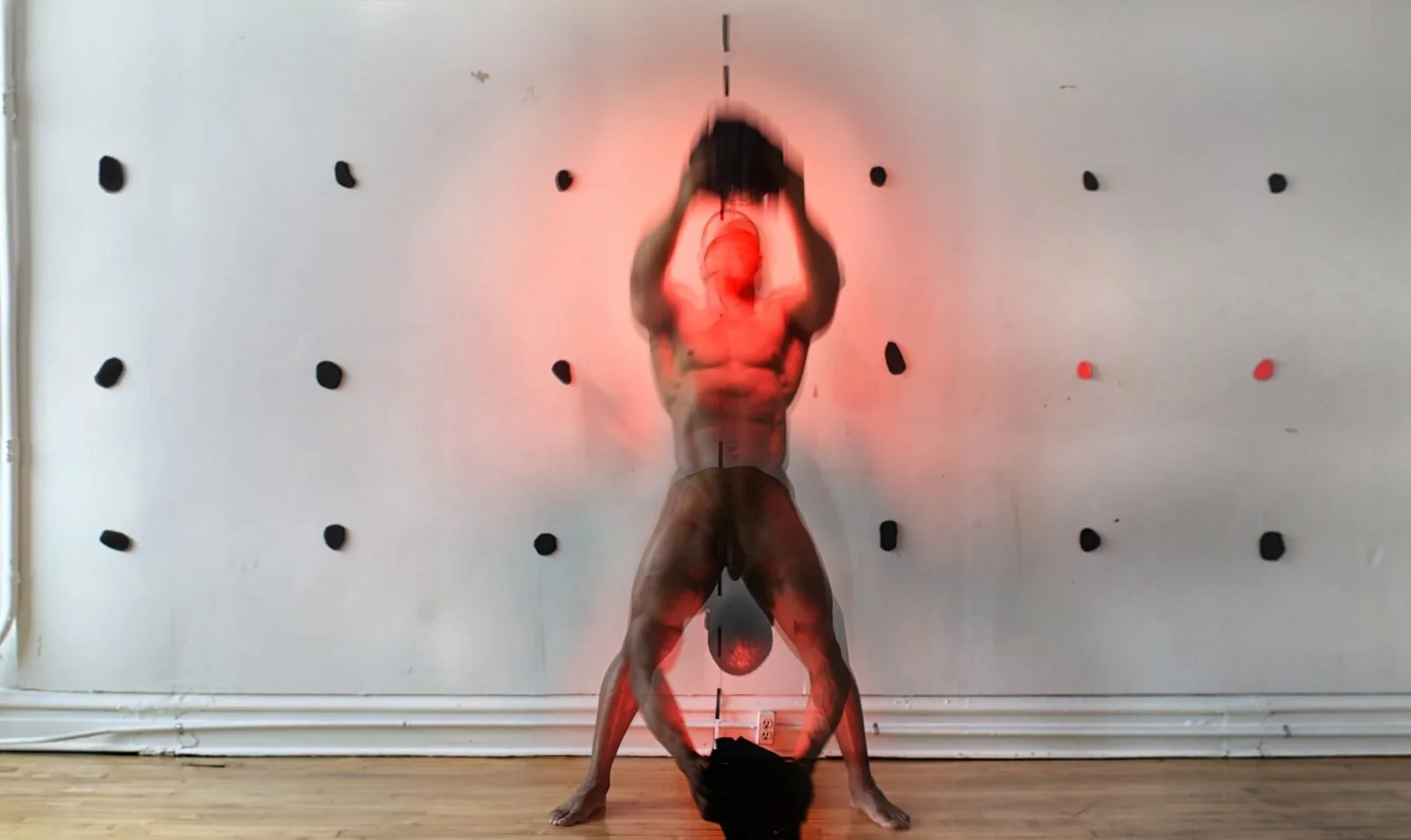
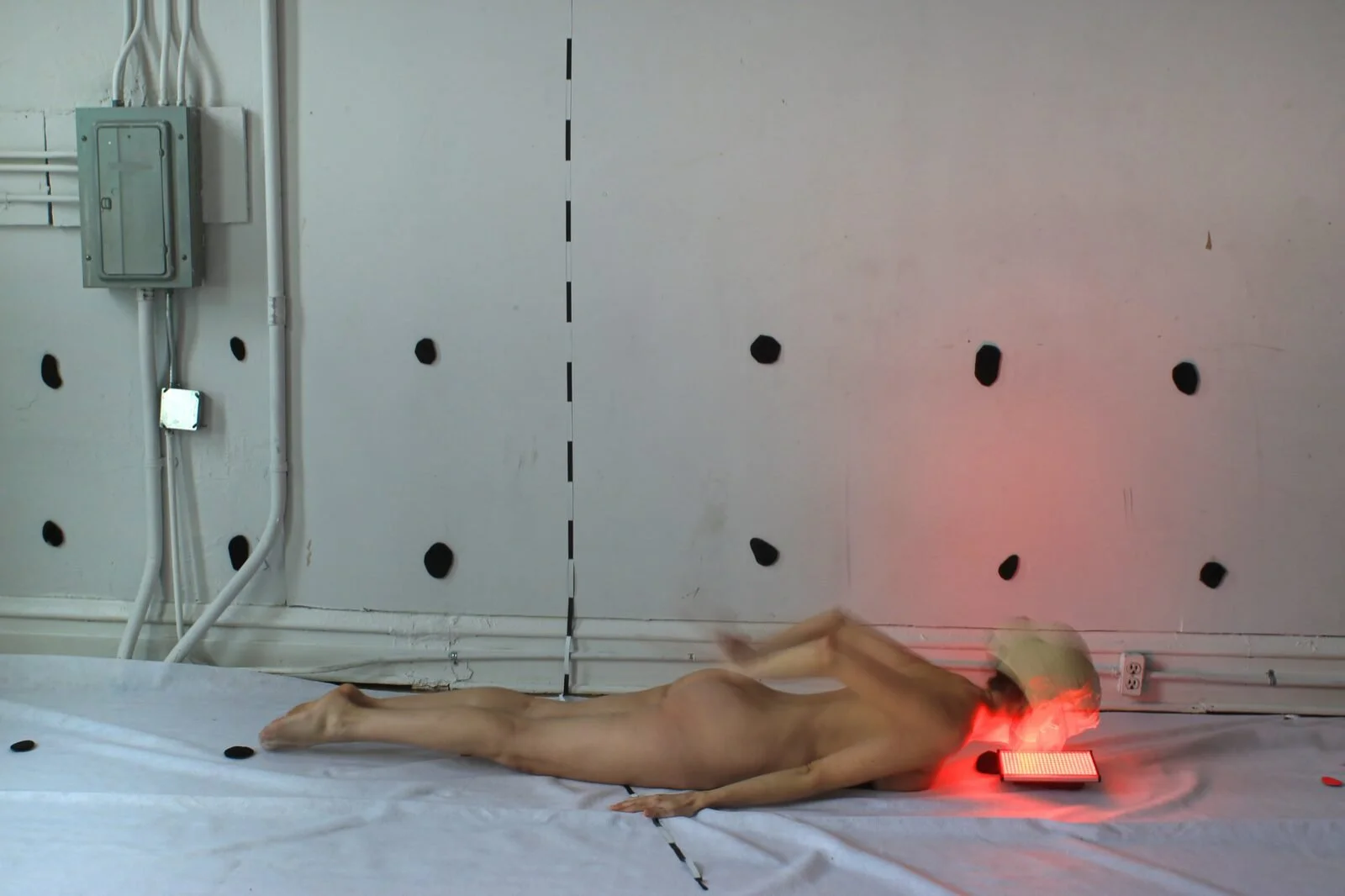
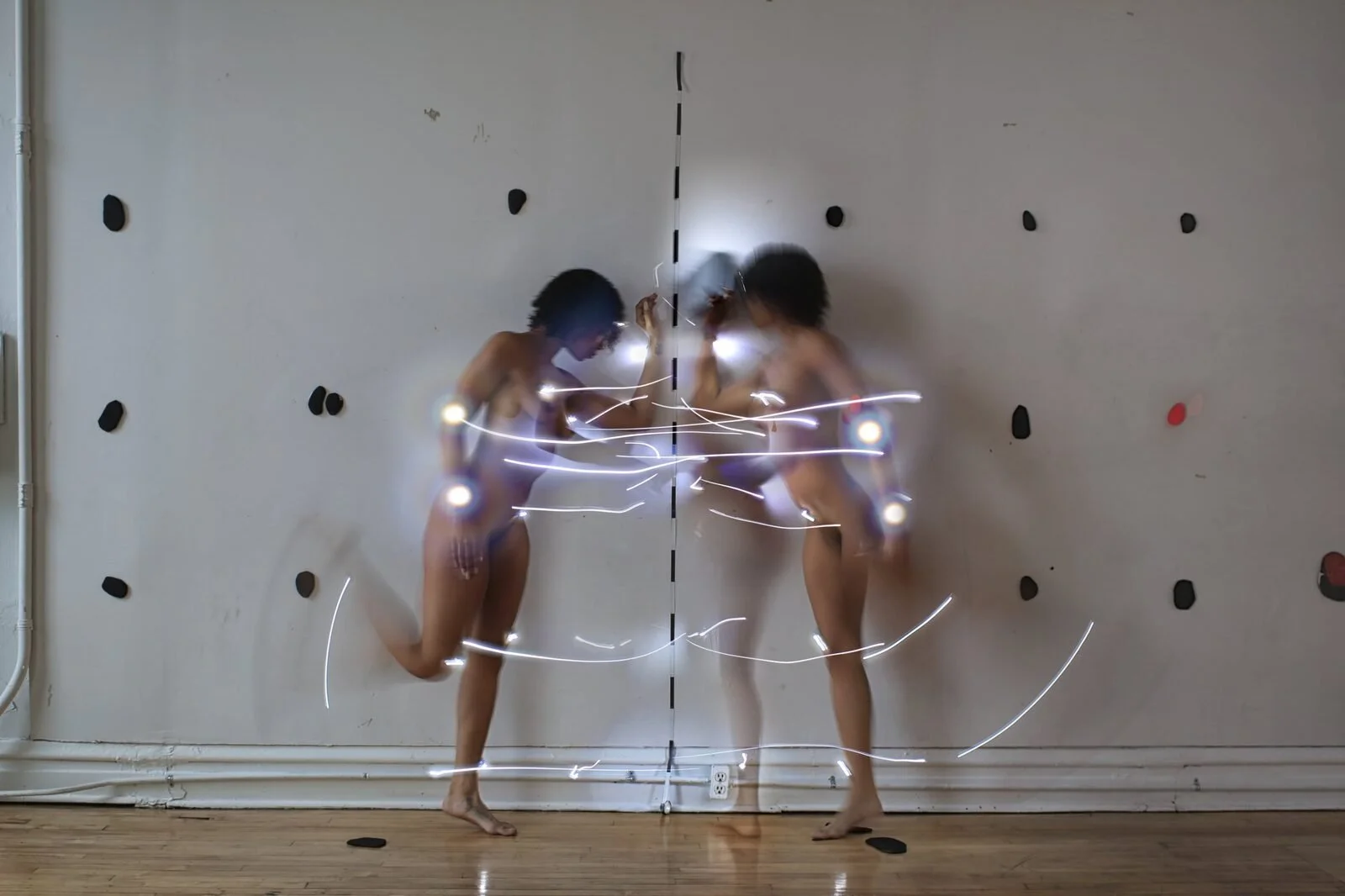
Each session followed a fixed protocol. The subject was briefed on the history of the original test, the premise of the experiment, and the fact that everything would be recorded for comparison. They then chose one of ten sealed envelopes, each containing a plate from Rorschach’s 1921 series, and were asked to respond to it with their body in front of the camera. To neutralize variables at the outset, every subject was photographed nude against the same bare, gridded wall.
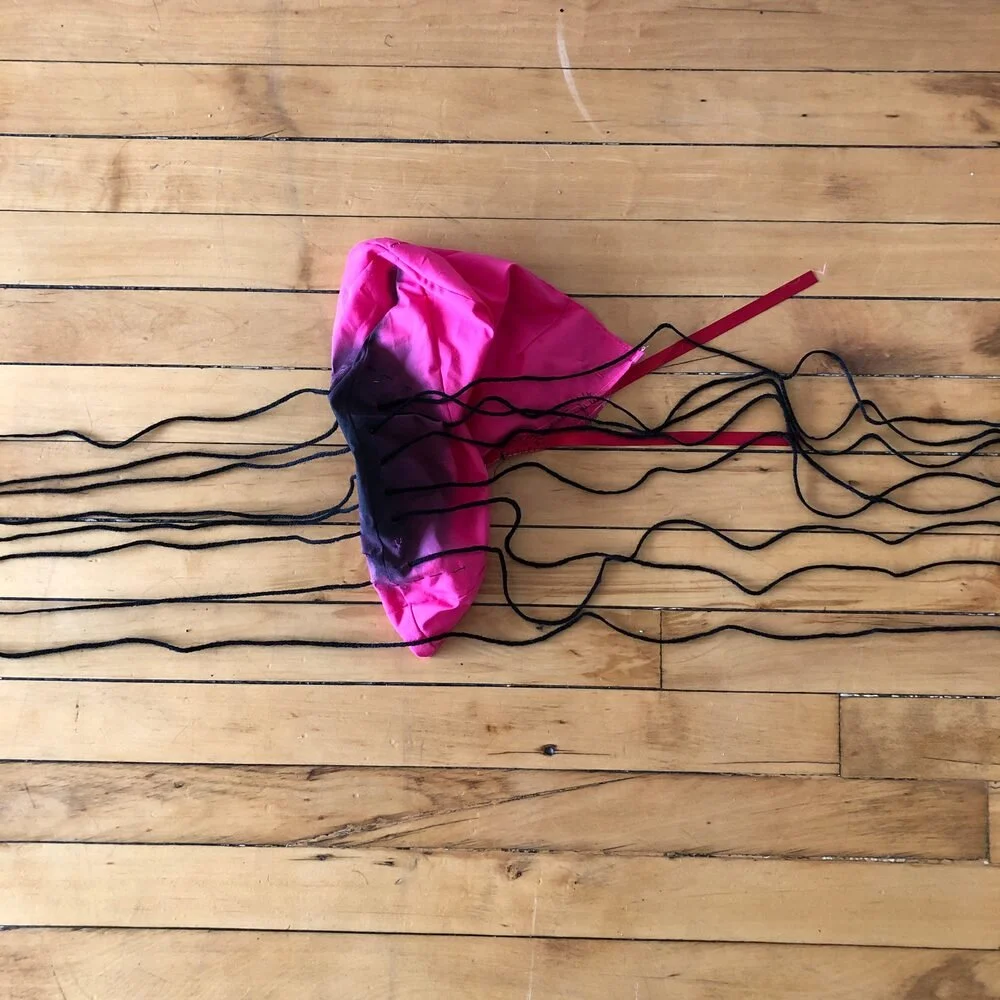
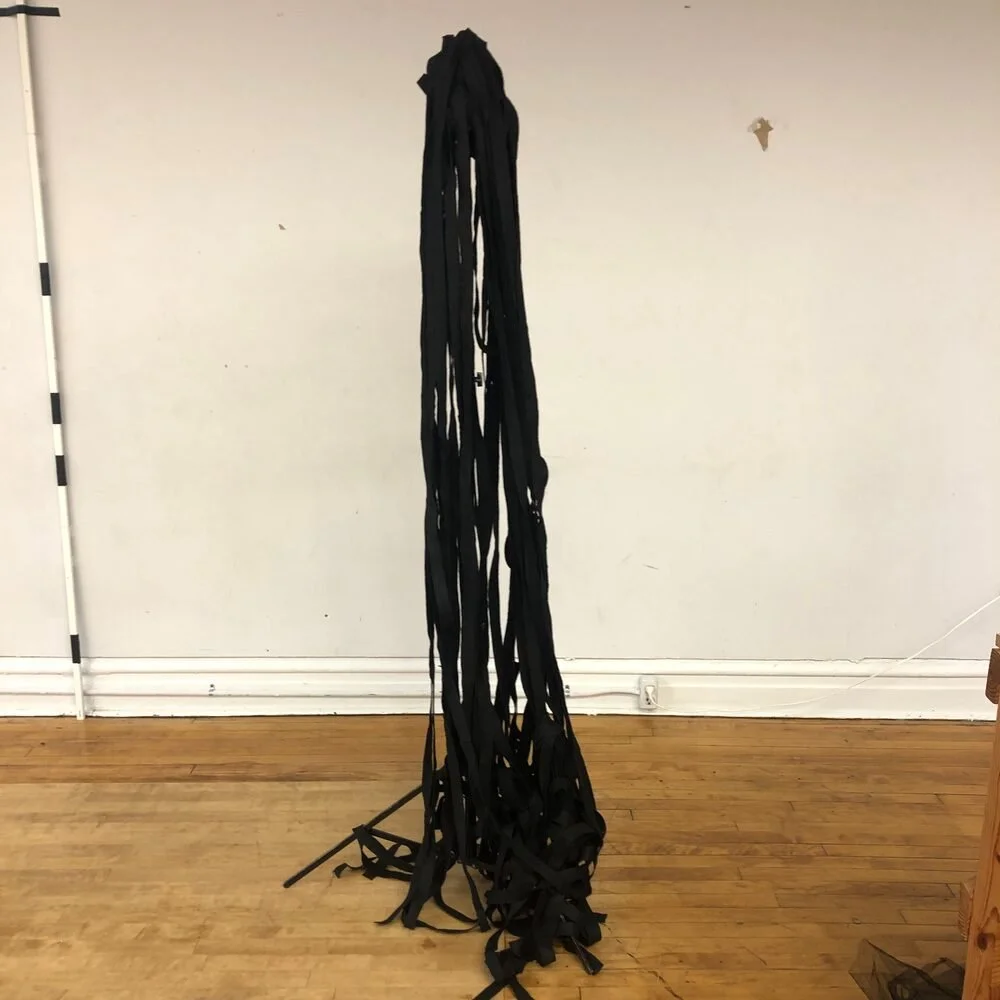
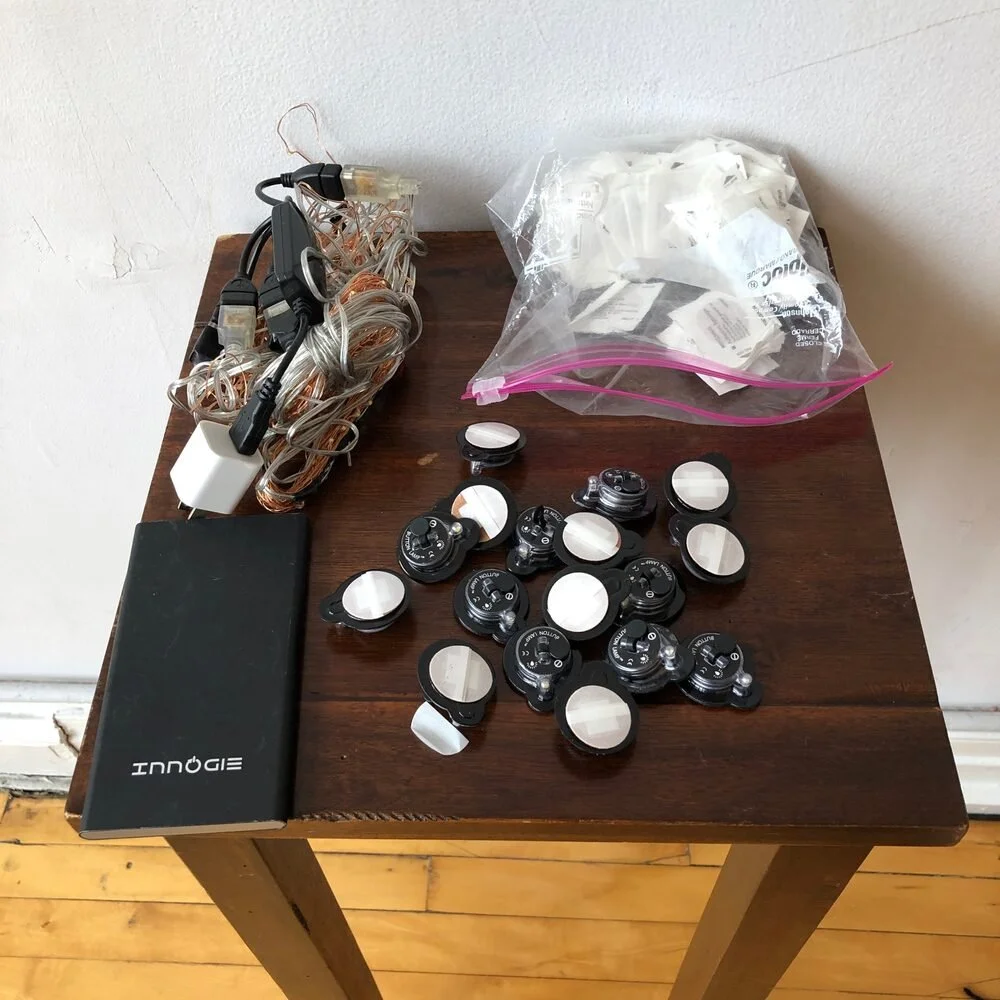
Within that frame, the subject held almost every decision. A set of props could be used alone, combined, repurposed or refused. Instruction was kept to a minimum so as not to steer the outcome. Subjects were told only that, as the blots are symmetrical, they could act out the symmetry if they wished. There were no set boundaries, and declining to perform was a valid response. Each subject also chose the soundtrack, from five pieces of music or silence.
After every session, I completed a data sheet recording the subject’s behavior, choice of props and music, creativity and attitude, alongside my own mood and theirs. The photographs are one result of the experiment; the data sheets are the other.
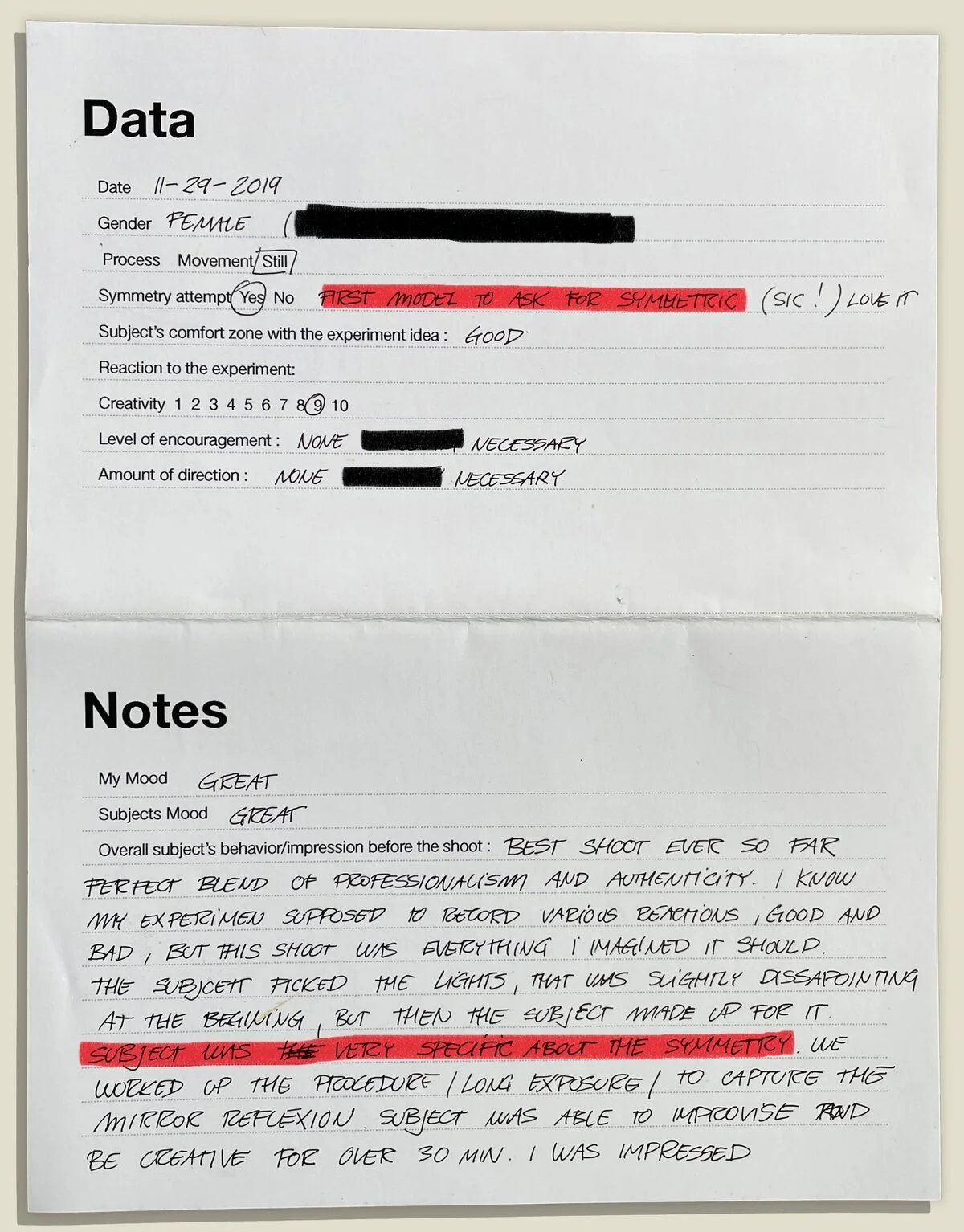
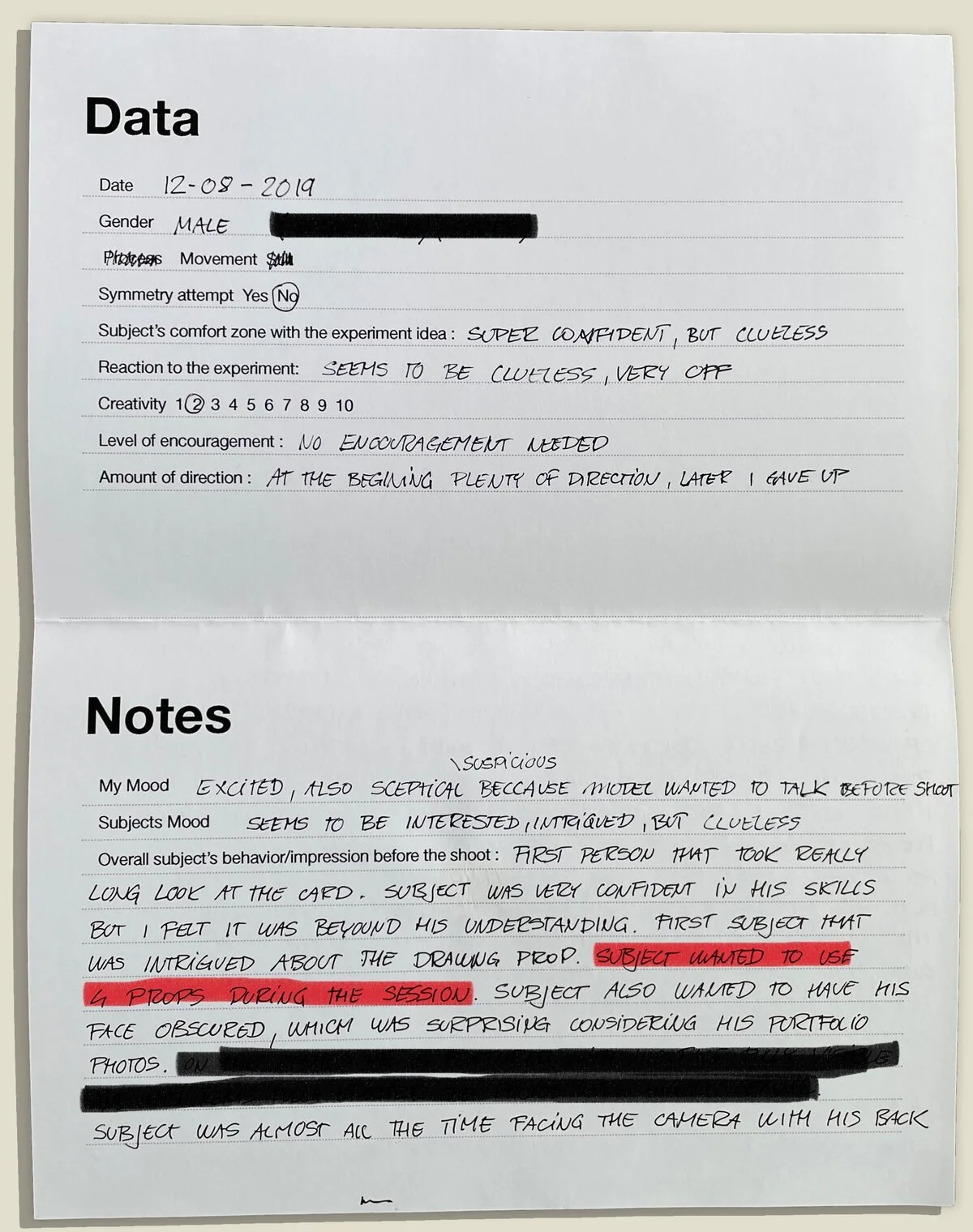
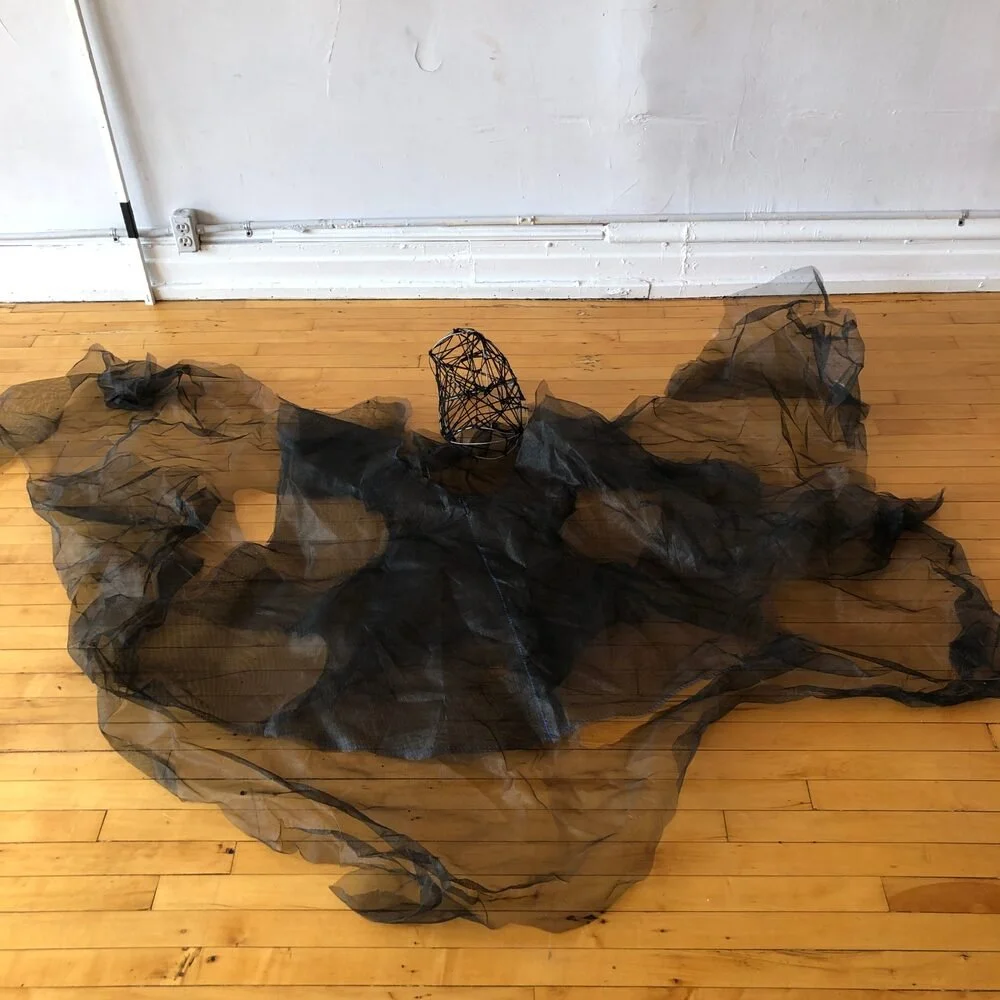
Props [ ___ ] · music [ ___ ]
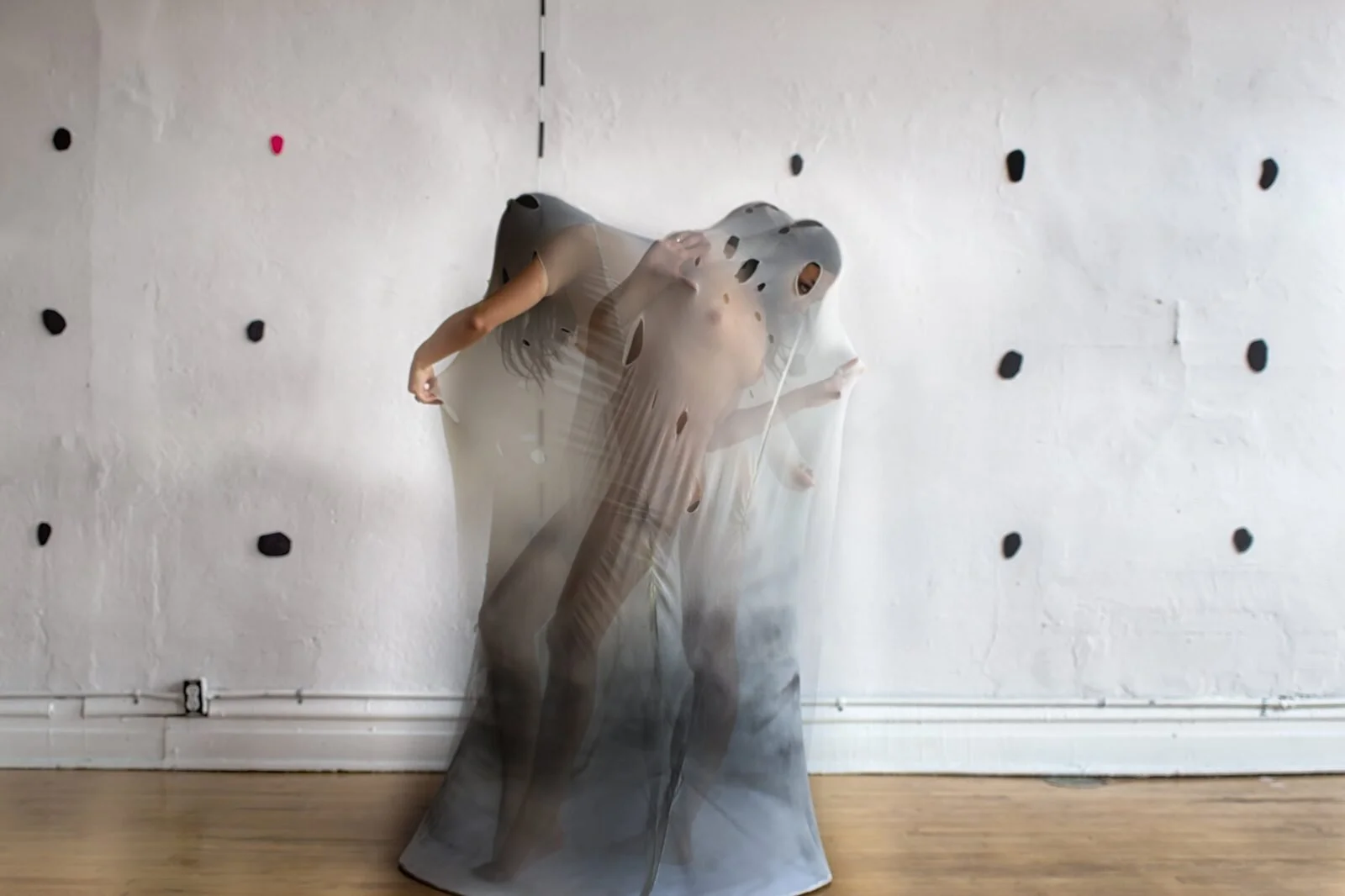
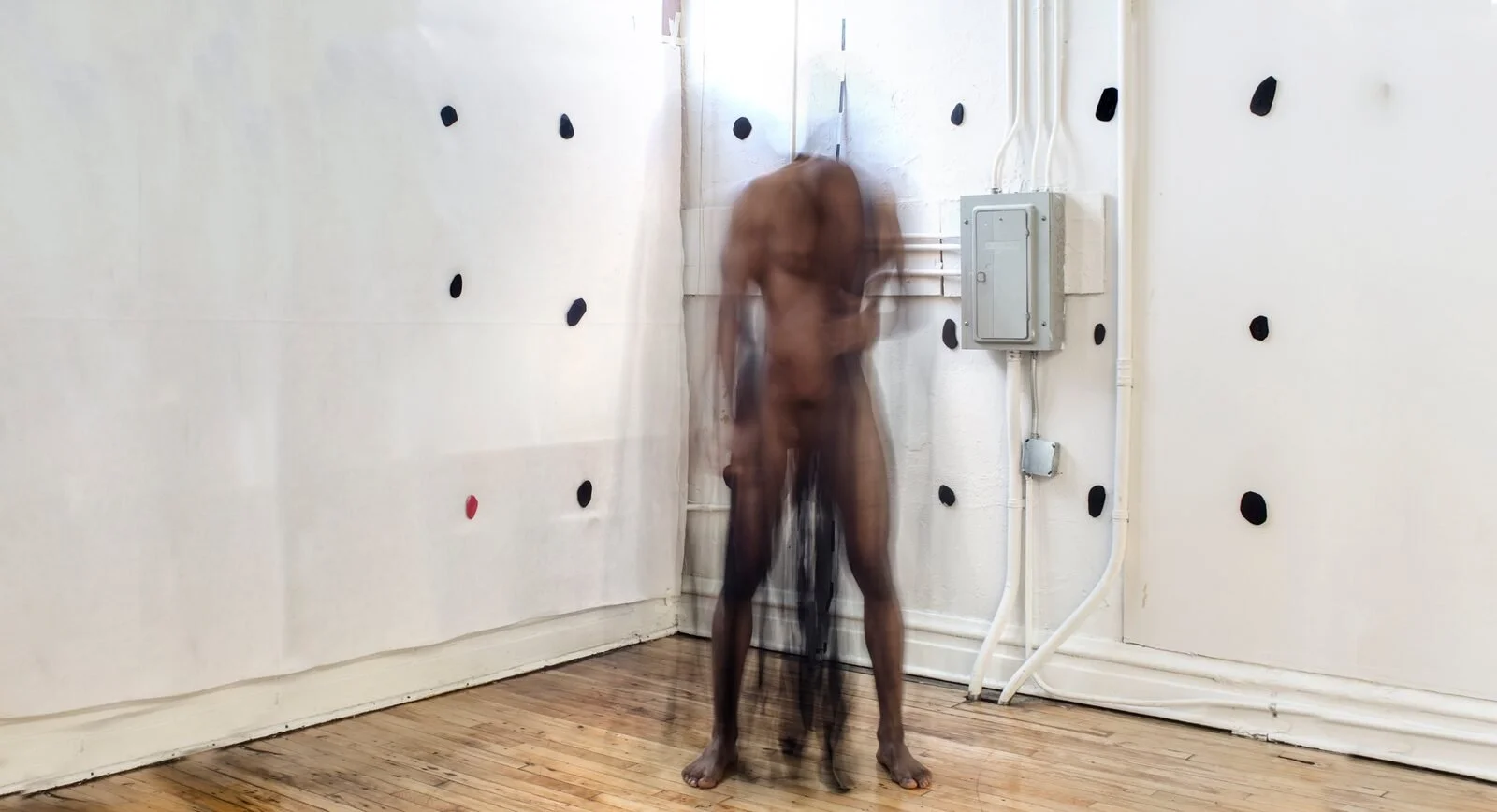
[ Caption — the corner, and why he kept his back to the camera. ]
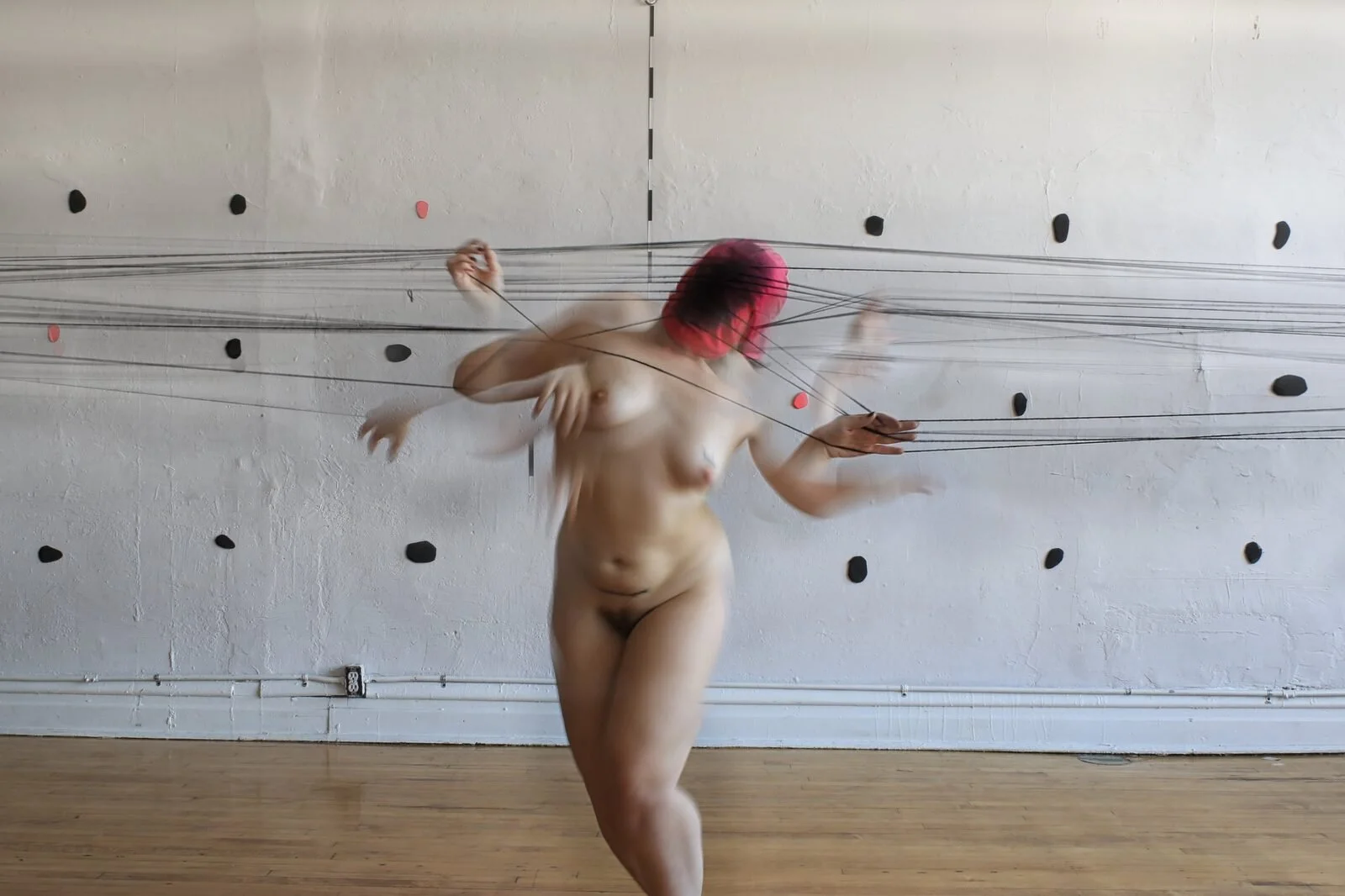
[ Caption — the hood, the yarn and the wires. ]
Interpretation withheld
The experiment changed how I work more than what I make. Its hardest lesson was accepting results that did not meet my aesthetic criteria. Once the protocol was fixed, the images belonged to the subjects as much as to me, and I had to let them stand.
In return, I found that the process held my interest as much as the outcome, sometimes more, and that observing a subject could be more revealing than directing one. Rorschach Test Experiment is where my interest in conceptual art began.
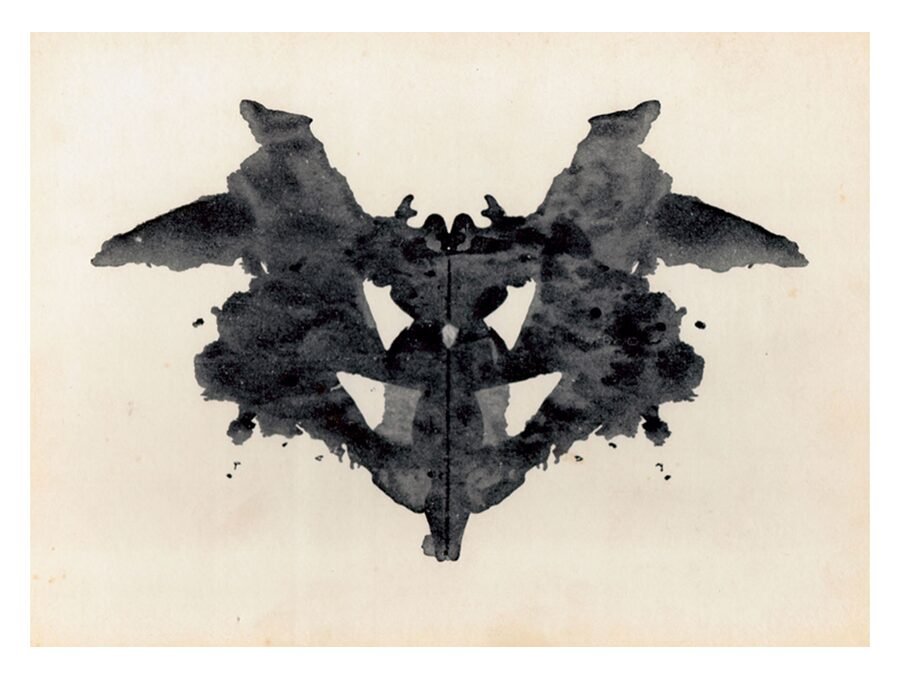
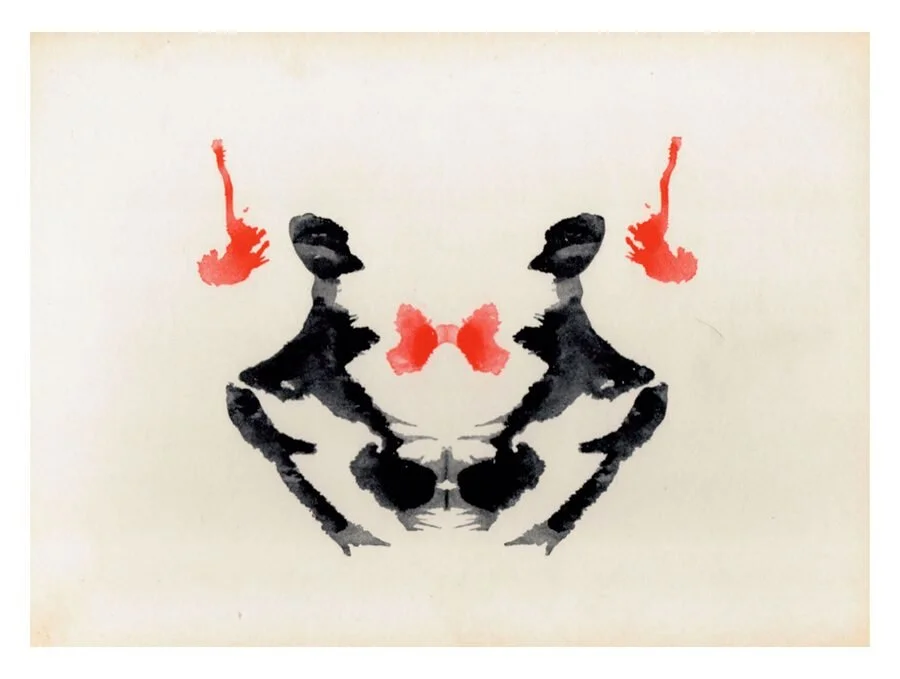
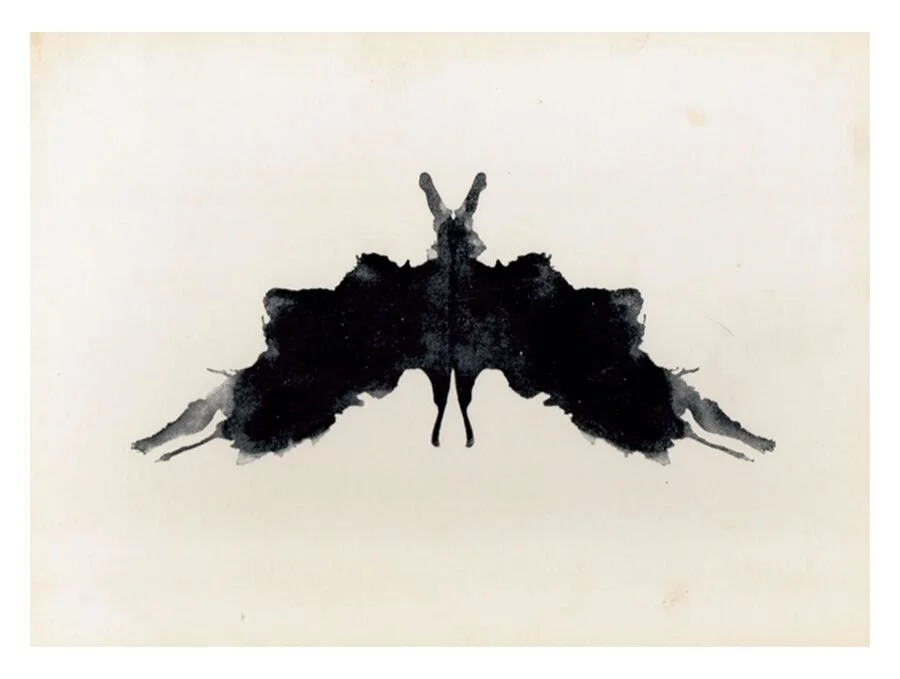
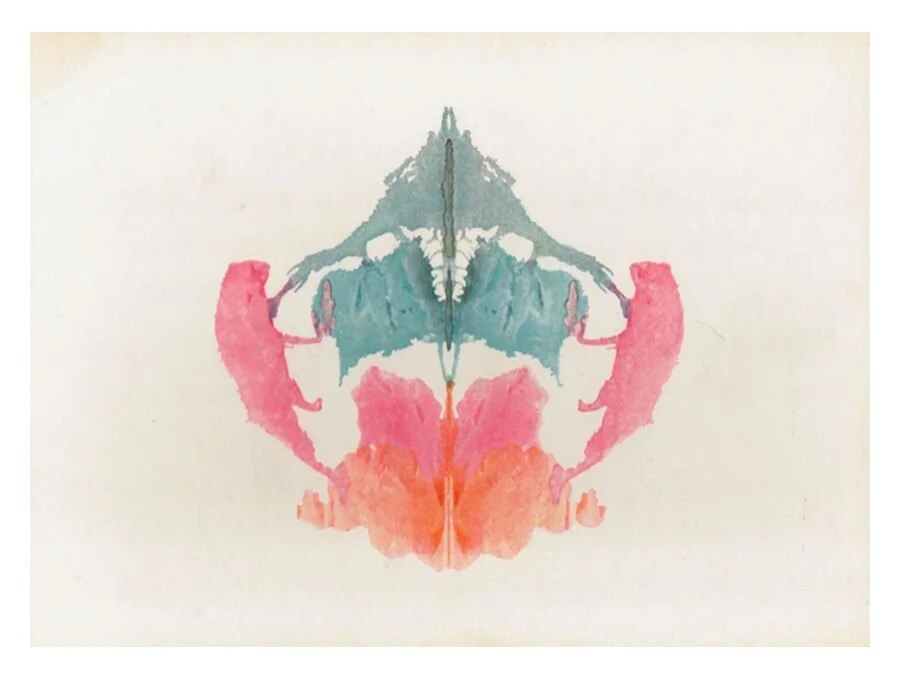
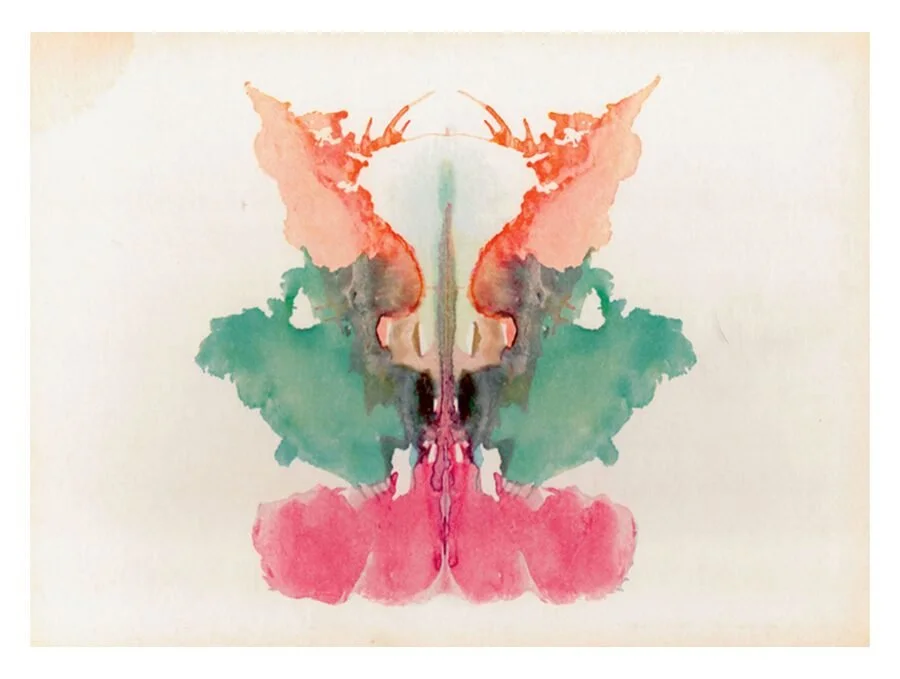
you see?
Blots after Hermann Rorschach, 1921
Six subjects · ten plates