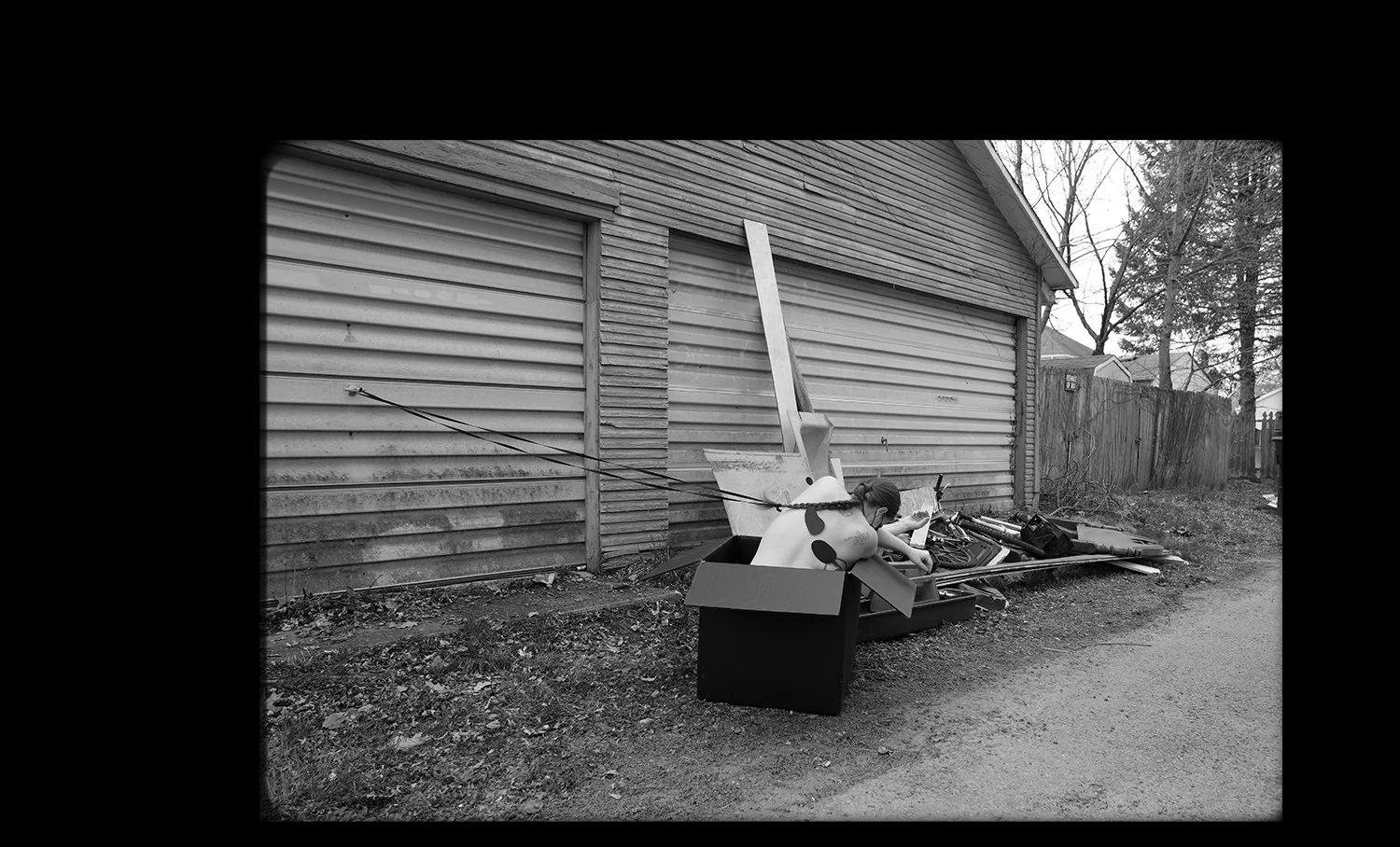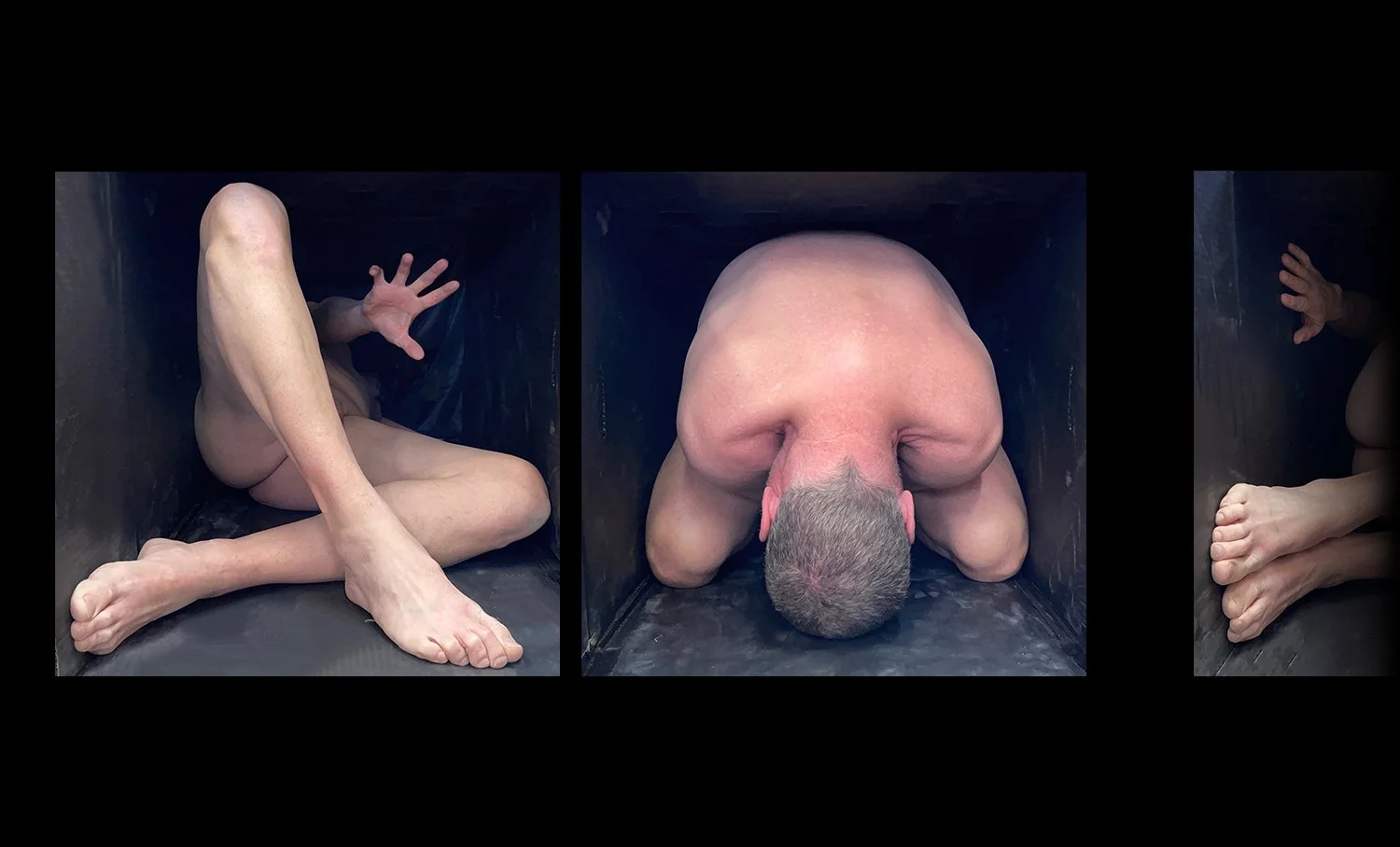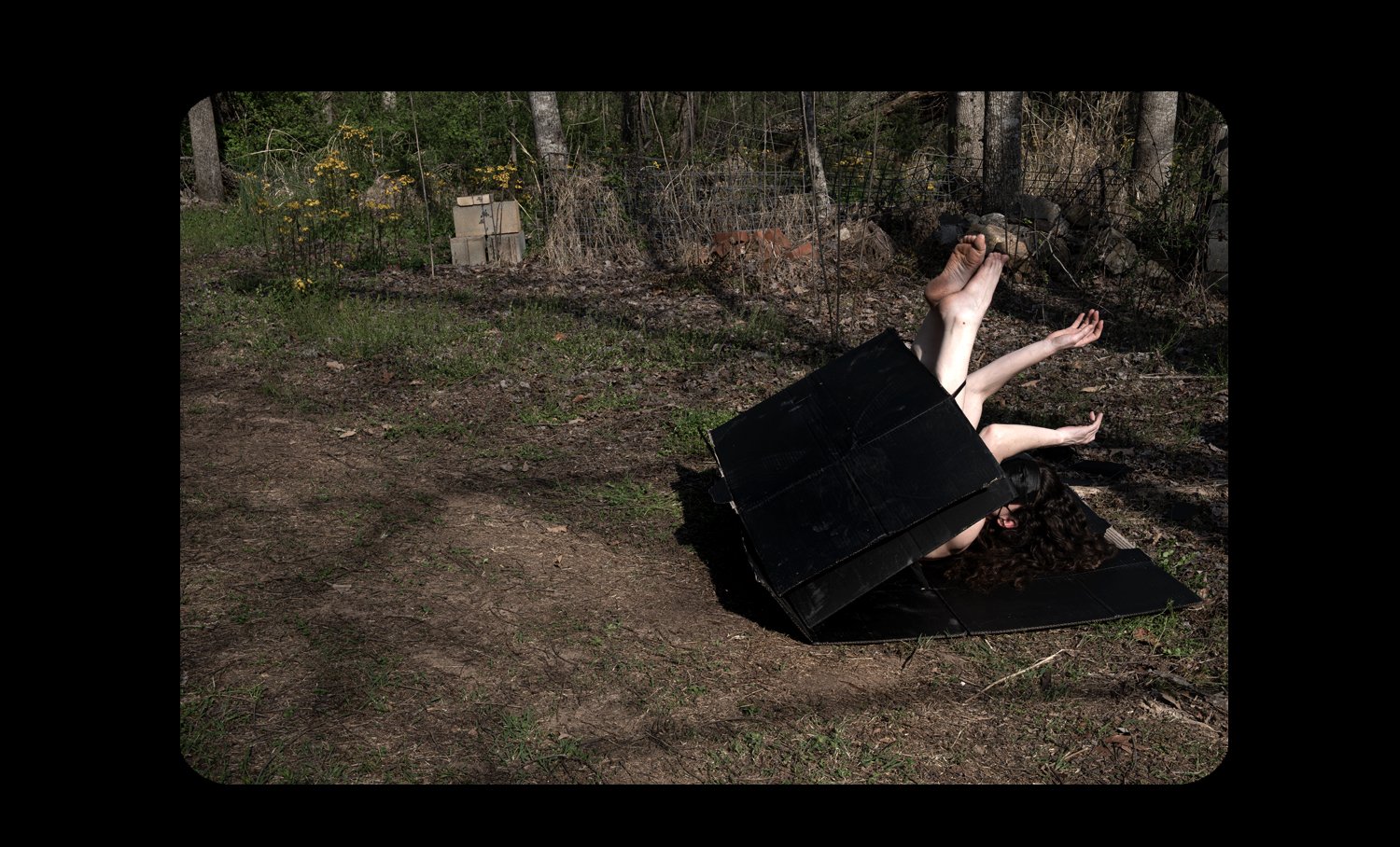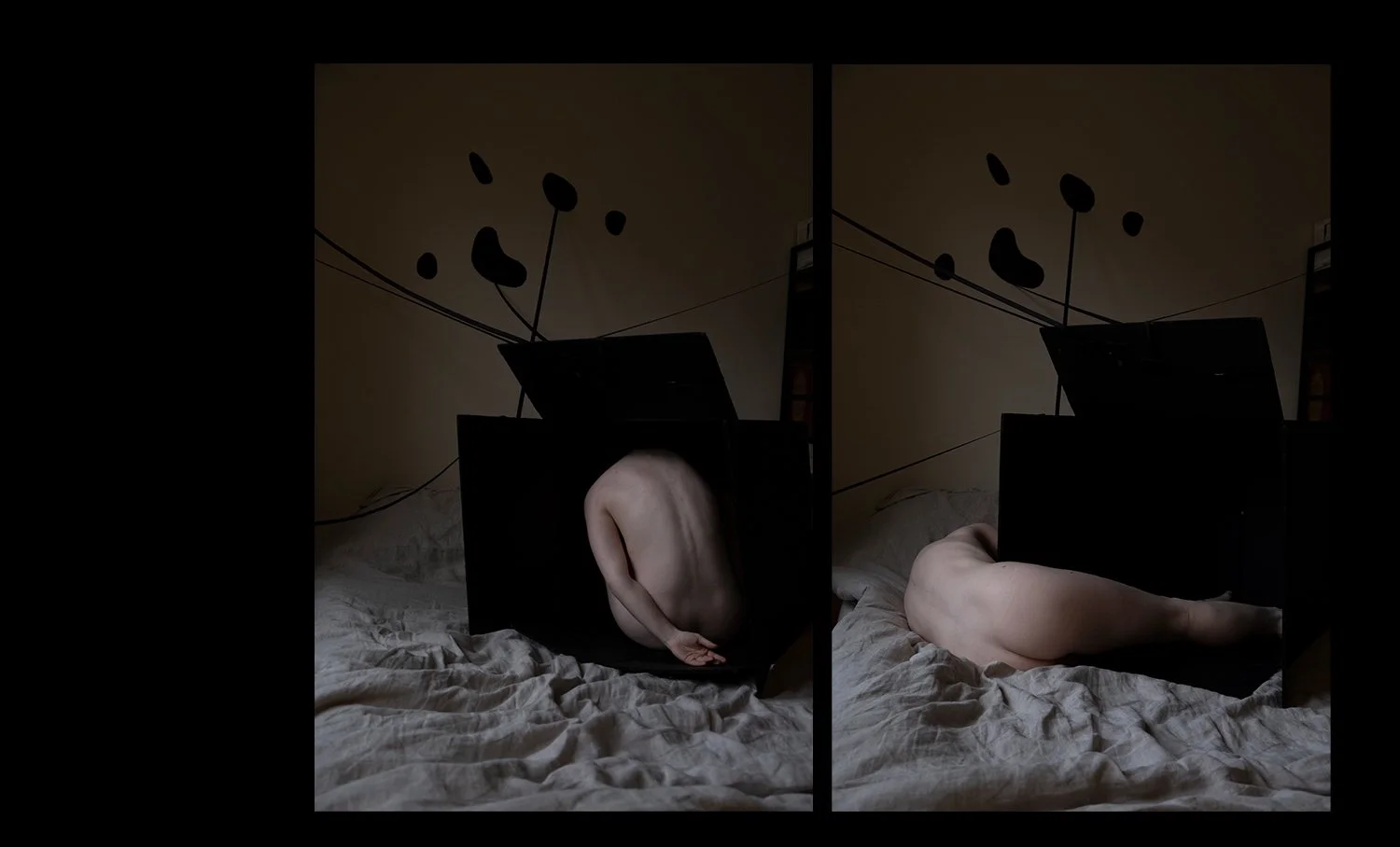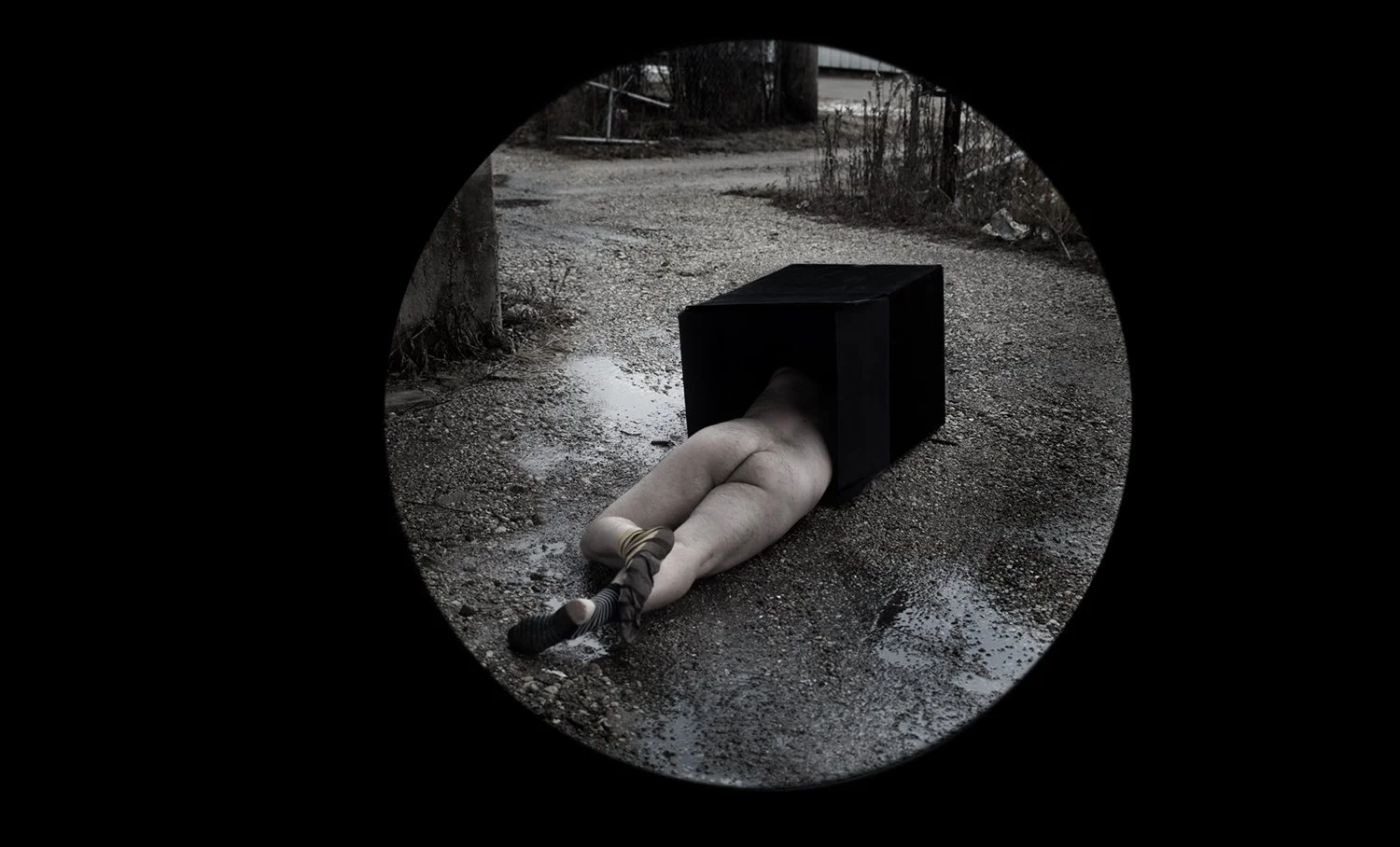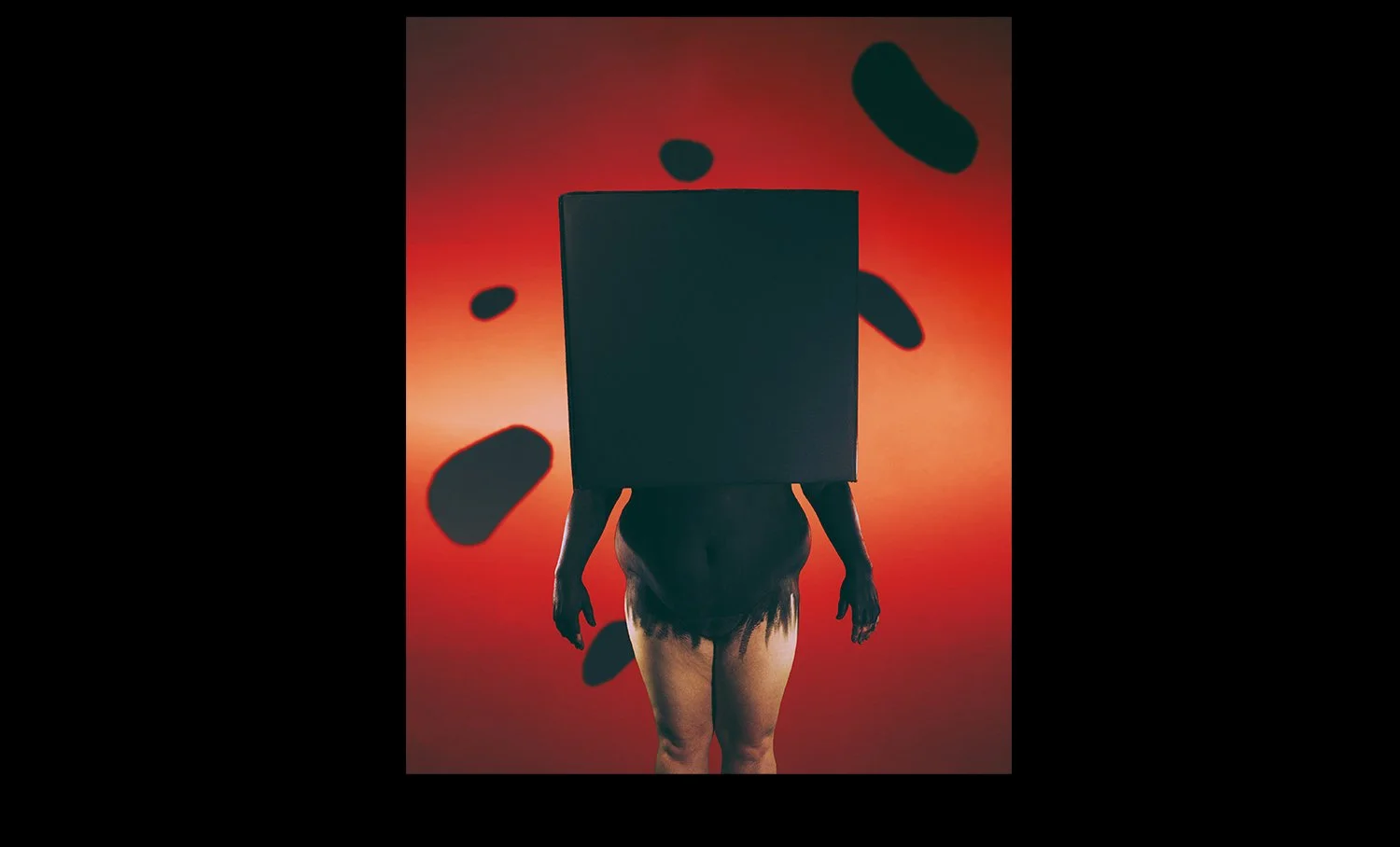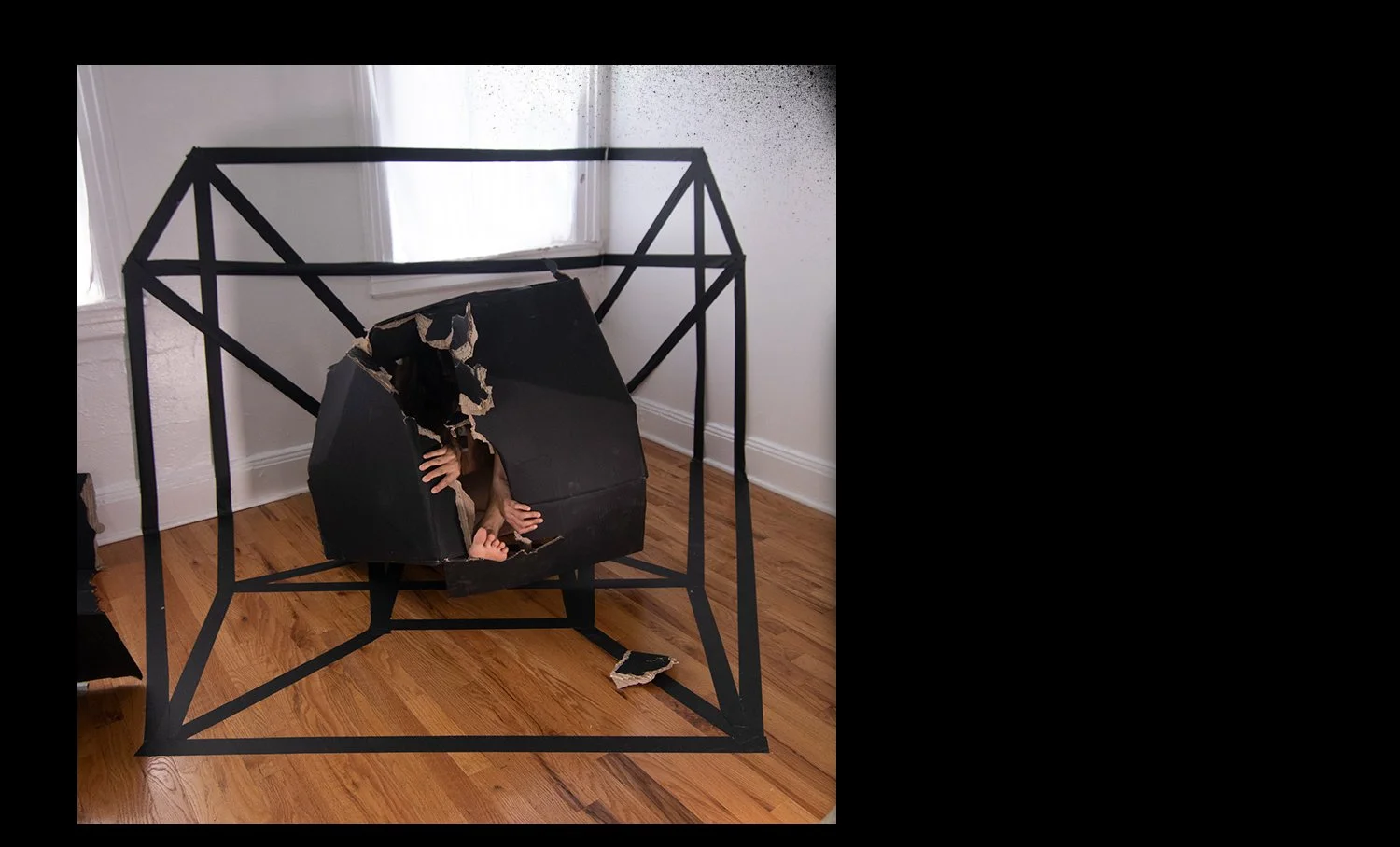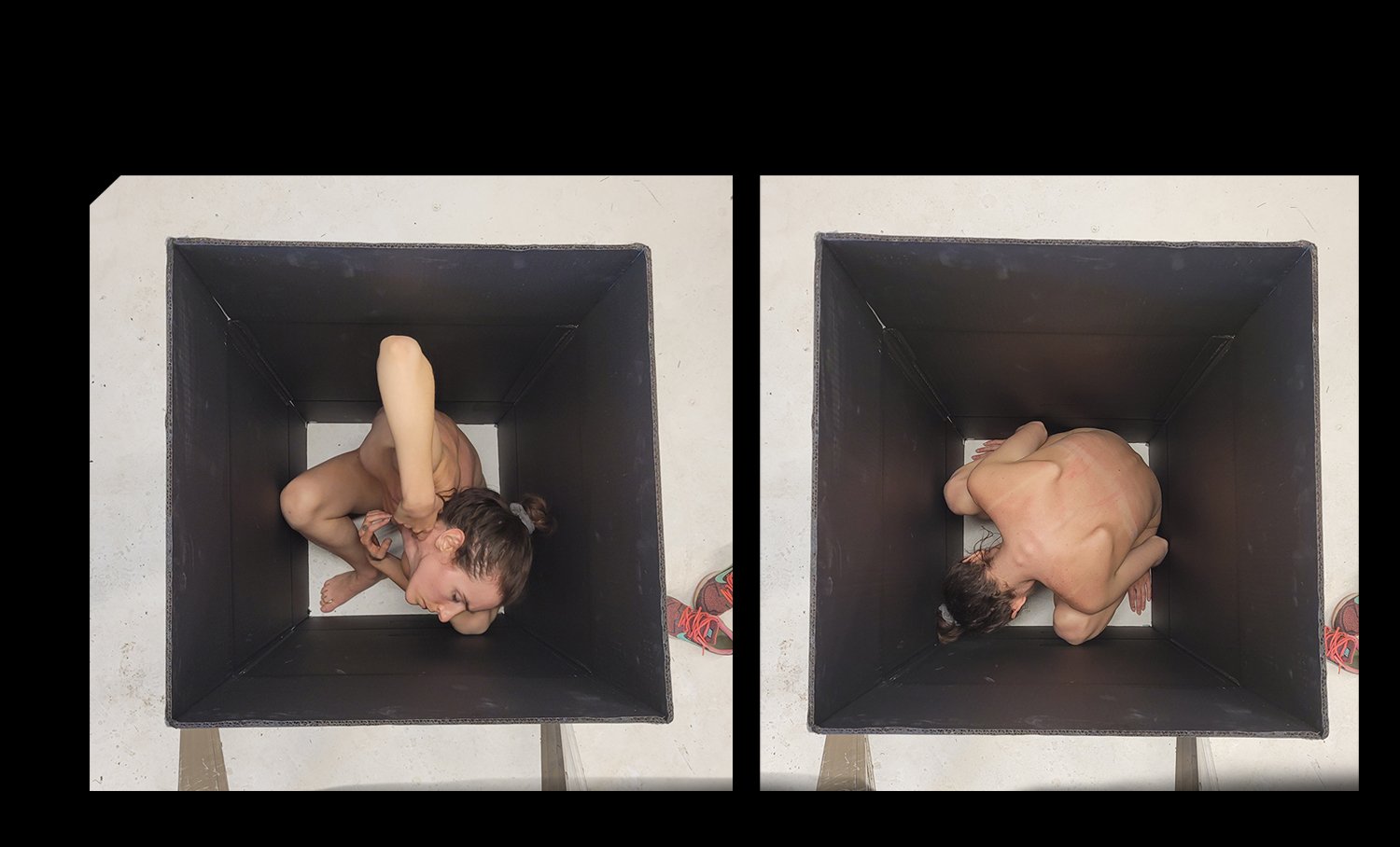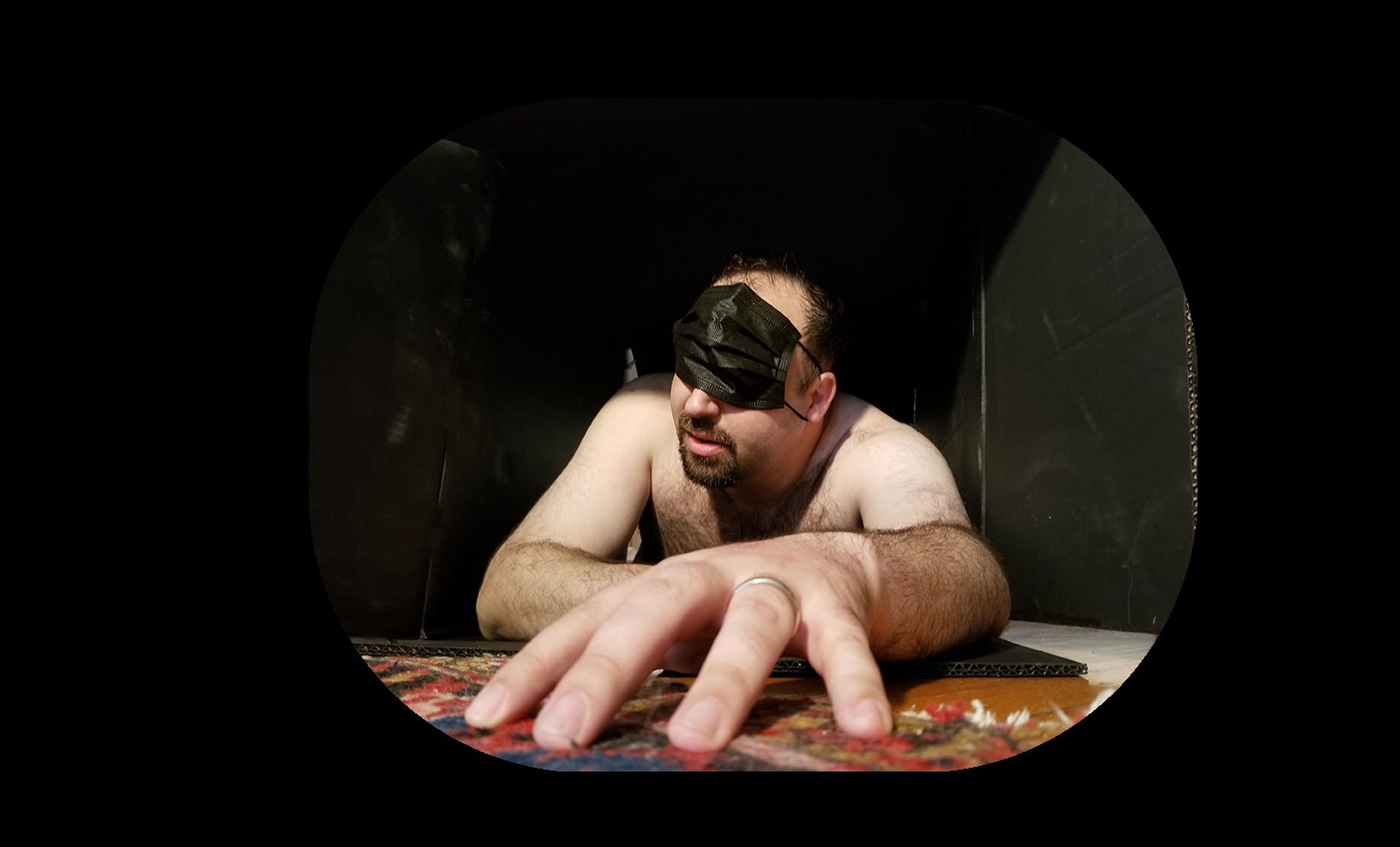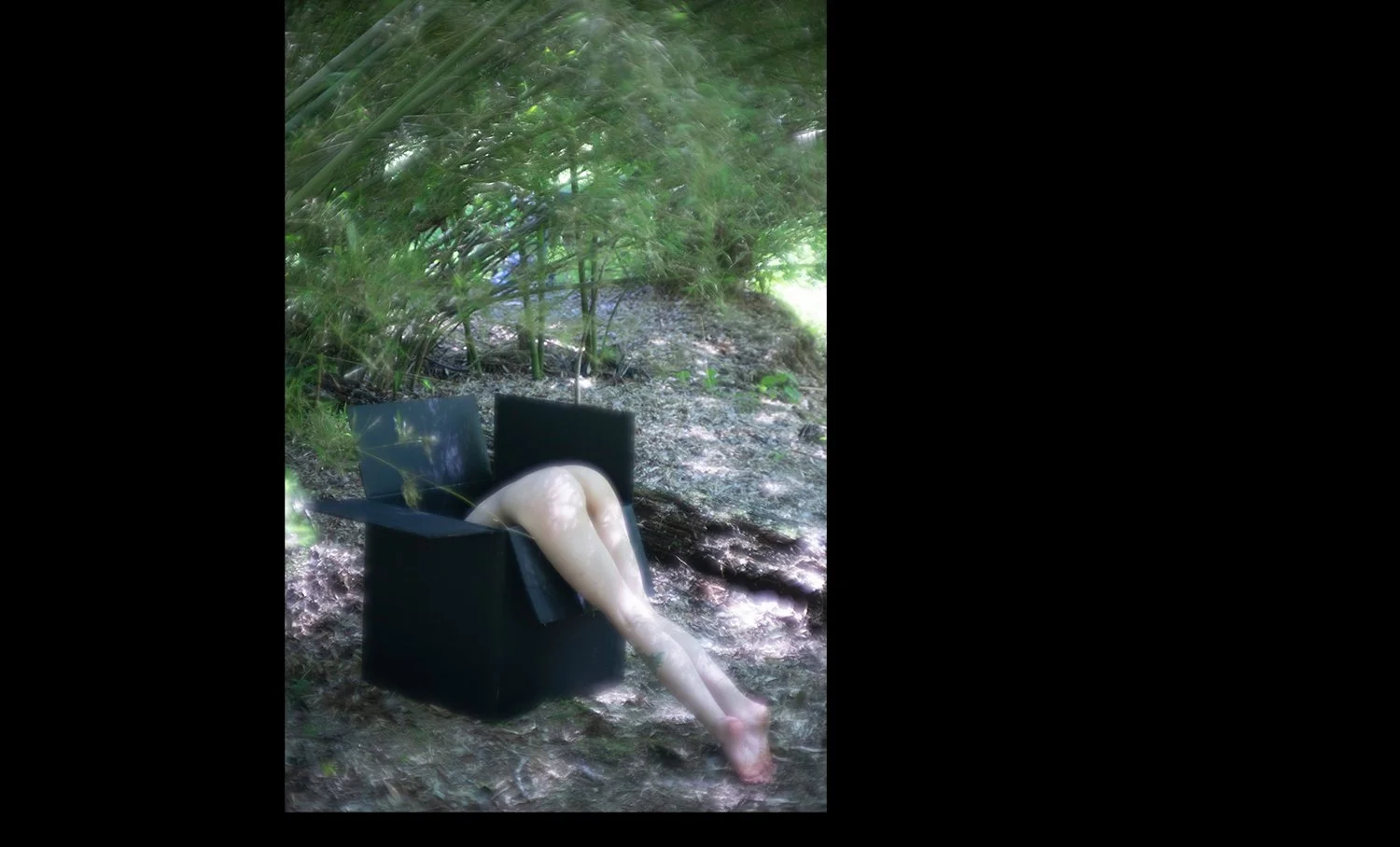
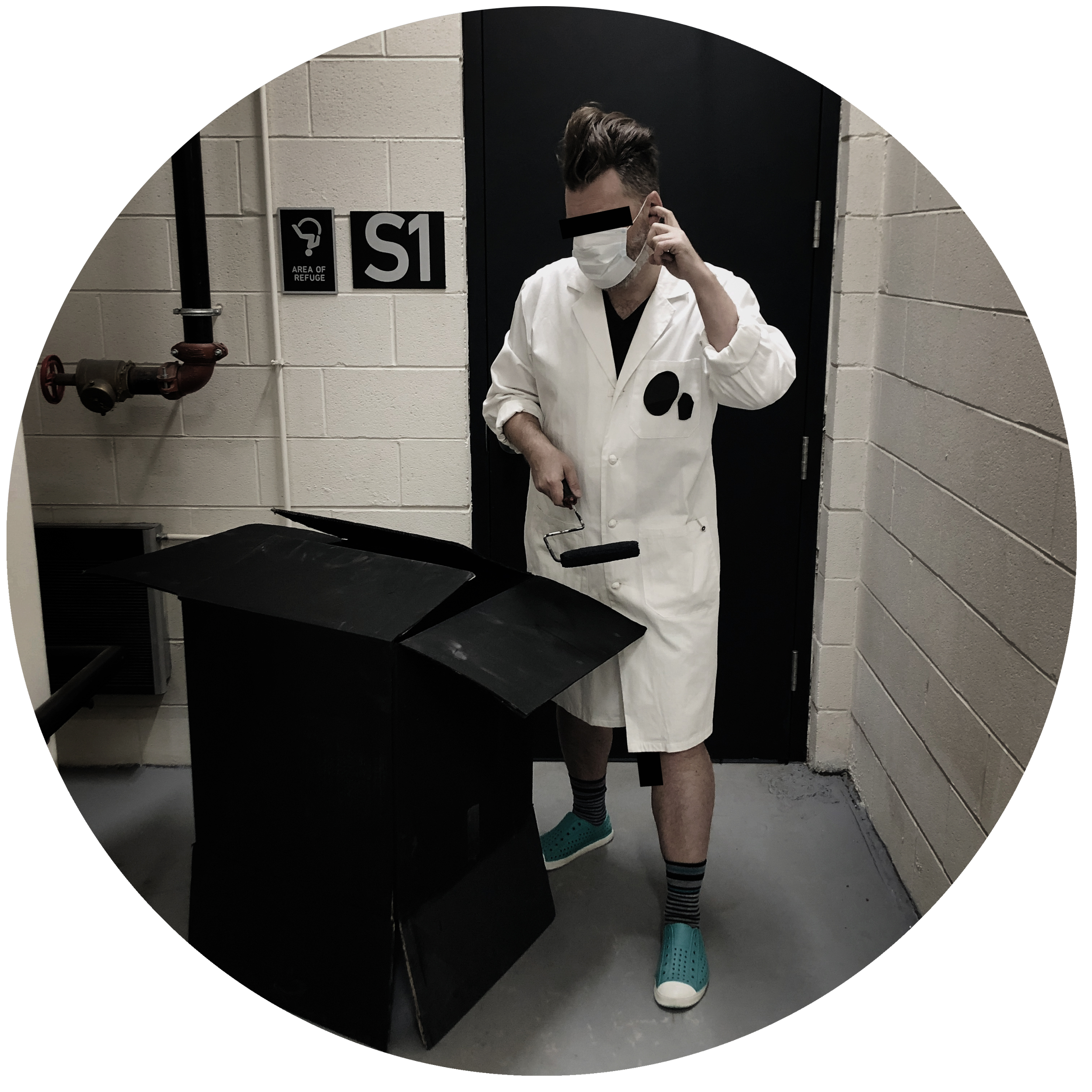
Black Box began in the early days of COVID-19, when in-person photography became impossible and isolation became the only shared subject available. Rather than wait out the lockdown, I turned the constraint into a method: I recruited volunteers through social media and asked them to become collaborators at a distance, each photographing themselves without my presence or direction. I mailed each participant an "art-kit" — a large black box, face masks, blindfolds, black rubber bands, and adhesive black dots, all recognizable elements of my visual language — and gave them a single loose prompt: interact with the box in whatever way expressed their current state of mind. The box stood in for confinement, but I deliberately withheld interpretation, letting each participant decide whether to enter it, destroy it, ignore it, or use it as a stage for something else entirely. The result is a body of work I authored without ever being behind the camera: a collective, remote-controlled portrait of a single emotional moment, assembled from ten strangers' private negotiations with isolation, using the same formal vocabulary — the black voids, the taut lines, the obscured face — that runs through the rest of my practice.
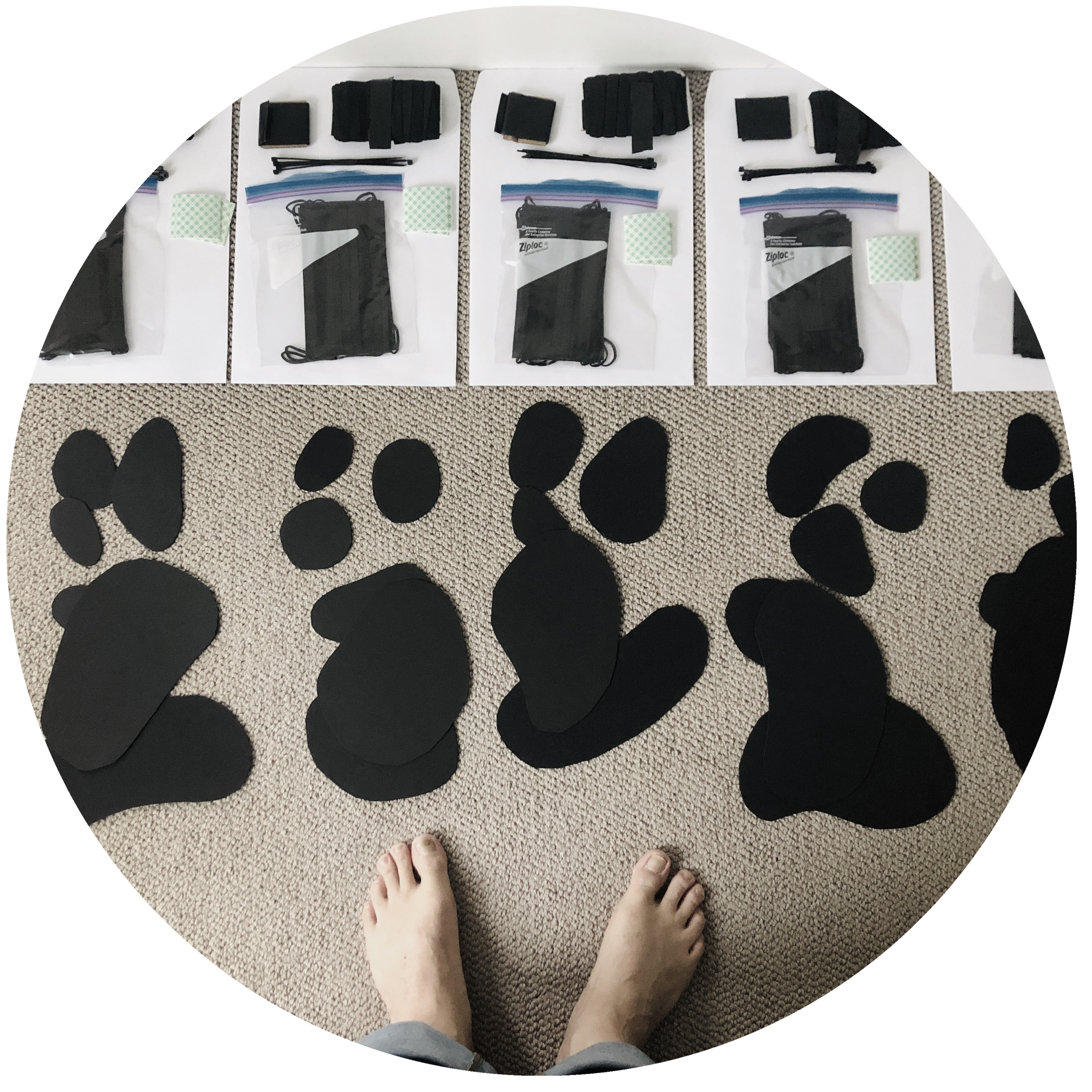
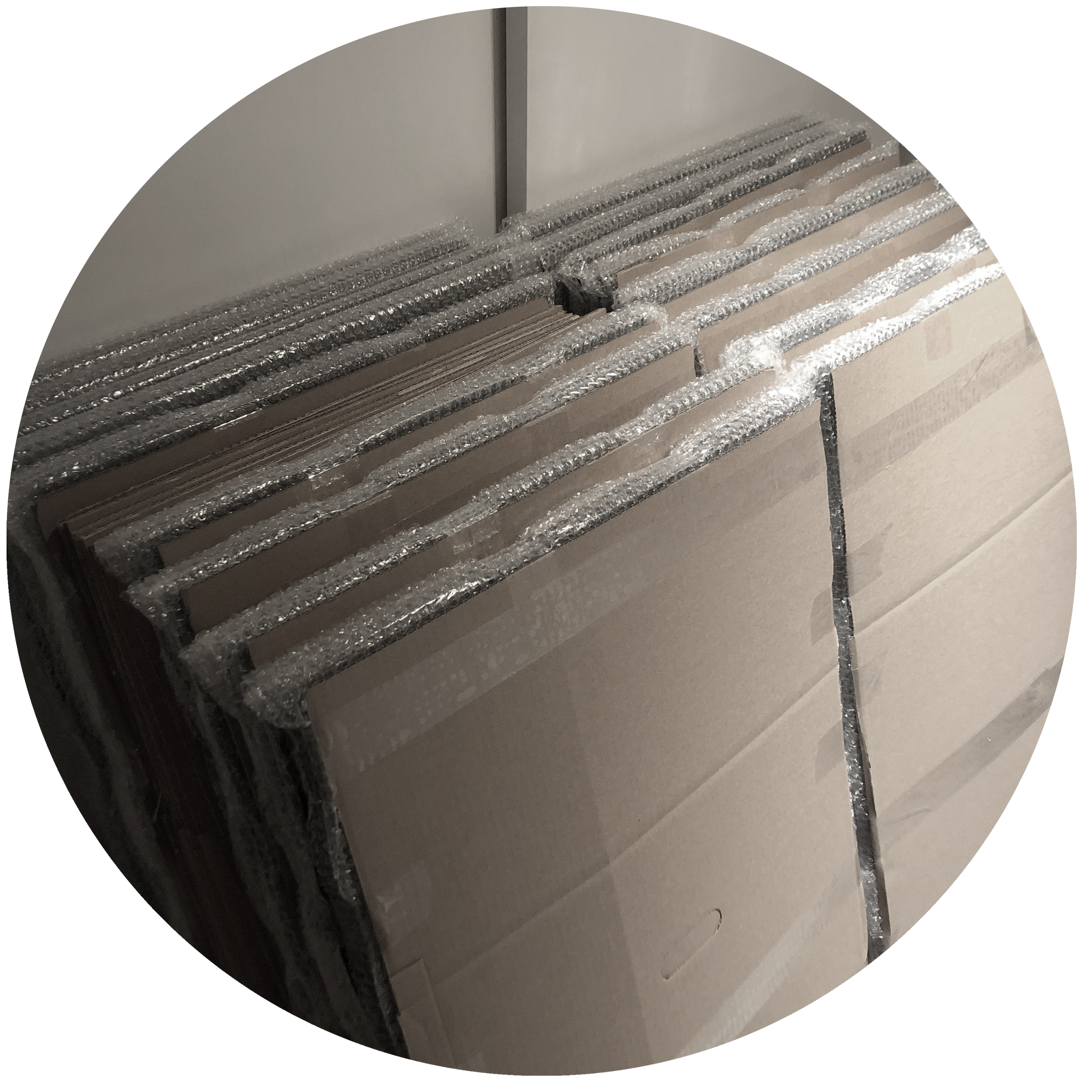
The kit sent to each participant: a large black box (isolation, made physical); face masks and a blindfold (concealment, anonymity); black rubber bands used as line (restraint, connection severed); adhesive black dots (the recurring void-shapes of my work); and a model release, returned along with each participant's photographs.
-
![]()
01. Diana
-
![]()
02. Shane
-
![]()
03. Keira
-
![]()
04. A Small Woman
-
![]()
05. SR
-
![]()
06. Gracie
-
![]()
07. Marceline VQ
-
![]()
08. Whitney
-
![]()
09. Dan
-
![]()
10. Rant Casey